

A toothpaste that began with a dentist’s own doubts
Most toothpaste brands begin with a marketing brief. ROZE BioHealth began with a dentist quietly unsatisfied with what he was recommending to his own patients, and to his own children. Dr. David Roze, a biological dentist with more than thirteen years of clinical practice in Dubai, spent years watching patients ask the same question in different forms: is there something as effective as fluoride, but closer to what a tooth is naturally made of? For a long time, the honest answer in the UAE market was no, not at a concentration that made a meaningful difference.
That gap is what led Dr. Roze, working alongside Dr. Agnes Roze, to develop a toothpaste built around 15% hydroxyapatite, the first product of its kind at that concentration in the Middle East. The name ROZE BioHealth reflects the brand’s underlying philosophy just as much as its founders: clinical credibility first, commerce second.
Why hydroxyapatite, and why now
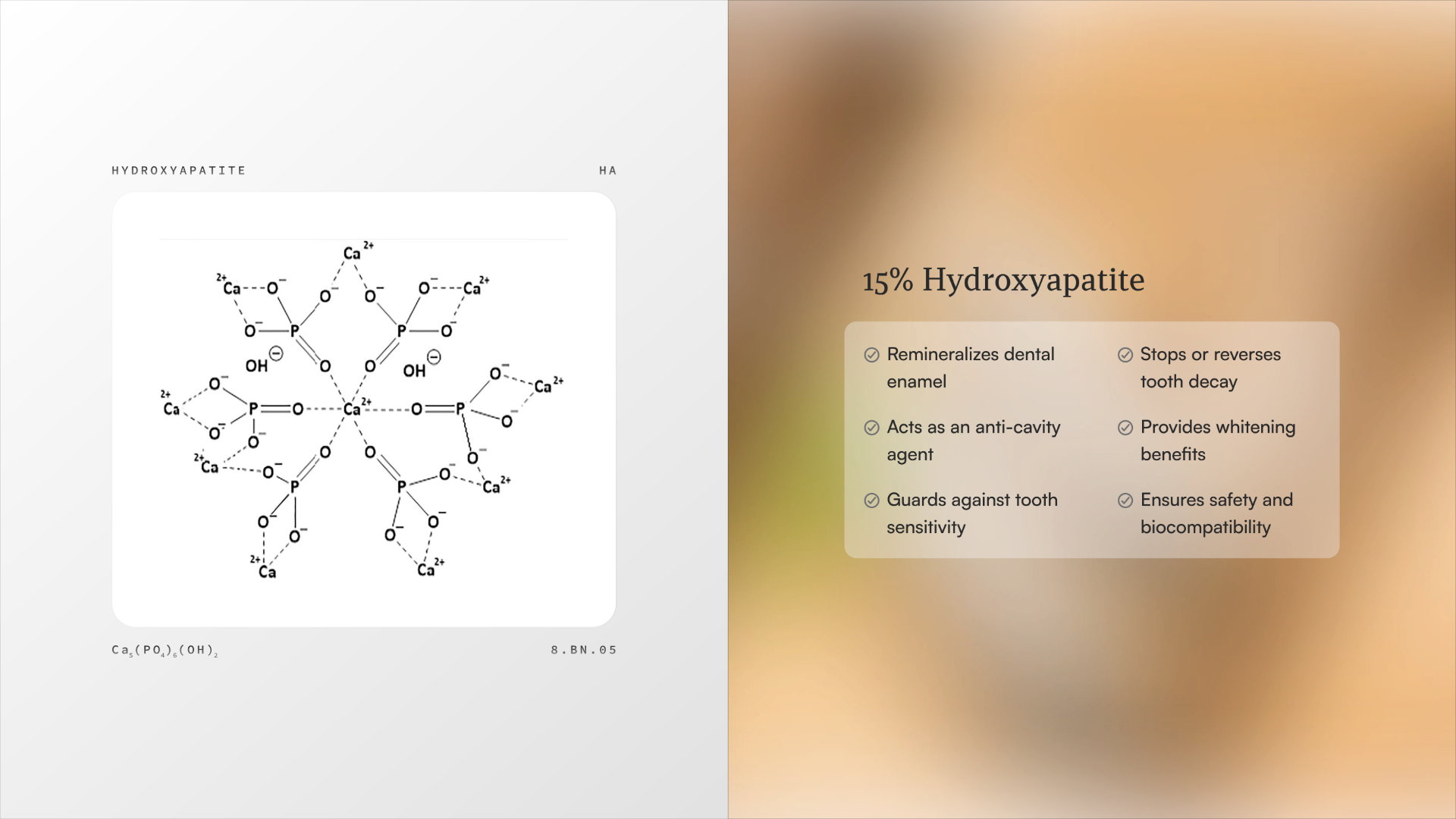
Hydroxyapatite is not a new discovery. It is the mineral that already forms the majority of natural tooth enamel, and it has been used in Japanese oral care for more than forty years, where it was developed as a remineralising ingredient long before it reached wider international attention. What changed in recent years is manufacturing capability, specifically the ability to produce micro-hydroxyapatite, a finer particle size that sits more effectively against enamel and within the microscopic dentinal tubules responsible for sensitivity.
For Dr. Roze, the appeal was straightforward. Rather than introducing a synthetic active ingredient to the mouth, hydroxyapatite works by supplying the same mineral enamel is largely composed of, in a form the body can use as it is already accustomed to. It fit naturally with a biological dentistry approach that favours working with the body’s existing chemistry wherever that is a credible option.
Building the UAE’s first 15% formula
Reaching a 15% concentration of micro-hydroxyapatite, currently the highest level found in a consumer toothpaste, was not a simple substitution. Many hydroxyapatite toothpastes on the market use only a small percentage of the mineral, more as a label claim than a functional ingredient. Formulating at a clinically meaningful concentration while keeping the paste stable, pleasant to use, and free from fillers required considerable development work, carried out with attention to particle size, texture, and how the mineral behaves in an alkaline base.
That alkaline pH balance was a deliberate choice as well, intended to support the mouth’s natural microbiome rather than stripping it, the way some harsher, more acidic formulas can. Combined with the absence of sodium lauryl sulphate, parabens, artificial colours, artificial sweeteners, and microplastics, the result was a shorter, more transparent ingredient list than most toothpaste on UAE shelves at the time.
Fluoride and hydroxyapatite, fairly weighed
None of this was developed as an argument against fluoride, which remains a widely endorsed, well-studied ingredient recommended by dental bodies around the world. ROZE’s position has always been that hydroxyapatite is a considered alternative for families who want a mineral-based, fluoride-free option, not a replacement that claims to be superior in every respect.
| Consideration | Fluoride | Hydroxyapatite |
|---|---|---|
| Remineralisation | Supports enamel by encouraging mineral uptake | Supplies the same mineral enamel is largely made of |
| Sensitivity support | Can help with sensitivity over time | May help occlude exposed dentinal tubules |
| Safety if swallowed | Requires care with dosage, especially in young children | Generally regarded as gentle if swallowed in normal amounts |
| Enamel compatibility | Works through a different chemical mechanism | Closely resembles enamel’s natural mineral structure |
| Family suitability | Widely used across all ages, with guidance on quantity for children | Often chosen by families wanting a fluoride-free daily option |
From clinic to a family of products
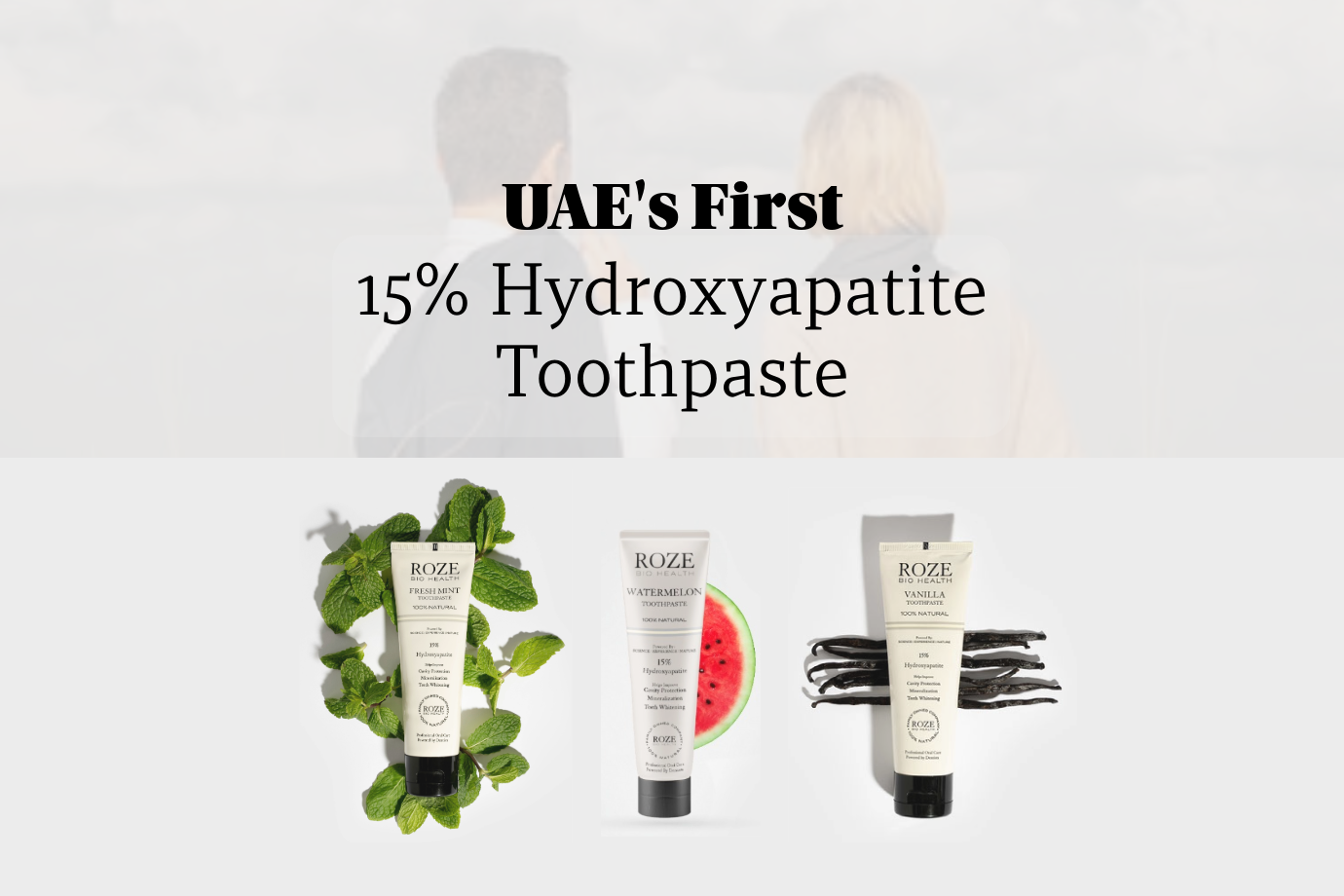
The first formula to reach patients was what is now the Natural Fresh Mint Toothpaste, followed by a Natural Vanilla Toothpaste for those who preferred a gentler flavour, and later a Watermelon Toothpaste designed specifically for children and family routines. Each shares the same 15% hydroxyapatite base, the same free-from ingredient list, and the same underlying intention: a toothpaste Dr. Roze could recommend to a patient and use with his own children without hesitation.
What the formula aims to support
- Remineralisation of enamel weakened by everyday acid exposure and wear
- Comfort for sensitive teeth, by potentially occluding exposed dentinal tubules
- A visibly smoother, gradually brighter smile, achieved without bleaching or abrasive polishing
- A gentler daily routine for children still learning to brush and spit properly
Made in the UAE, with certification behind it
Being formulated and produced in the UAE was also a deliberate part of the brand’s story, reflecting a wider ambition to build a genuinely regional standard for biological dentistry rather than import one wholesale. The range carries certifications including EU Certified, FSC, SGS, and BPA-Free status, and is formulated to be Halal-appropriate, details that matter to a UAE audience evaluating a toothpaste made in UAE for the first time.
Building locally also meant Dr. Roze could stay closely involved in each stage of production rather than overseeing a formula manufactured at a distance, a point he considers important for a product intended for daily use by children and pregnant women. For a UAE toothpaste brand, that level of oversight was treated as a baseline expectation rather than a marketing feature to highlight separately.
What patients noticed first
In the early months after the mint formula reached patients, the feedback Dr. Roze heard most often was not about flavour or packaging, it was about sensitivity. Patients who had lived with discomfort from hot drinks or cold water for years reported a gradual easing after weeks of consistent use, which he attributes to hydroxyapatite’s potential to occlude the exposed dentinal tubules responsible for transmitting those sensations to the nerve. Others mentioned a smoother feel to their teeth when running a tongue across them, consistent with hydroxyapatite filling microscopic surface imperfections rather than working through abrasion.
None of this is presented as a guarantee. Individual results vary, and hydroxyapatite, like any oral care ingredient, works best as part of a consistent routine that includes proper brushing technique, flossing, and regular dental check-ups rather than as a stand-alone fix.
Frequently asked questions
What makes ROZE’s hydroxyapatite toothpaste different from other hydroxyapatite products?
The concentration and particle size. ROZE uses 15% micro-hydroxyapatite, currently the highest concentration found in a consumer toothpaste, rather than the token amounts some other hydroxyapatite toothpastes include.
Is hydroxyapatite toothpaste natural?
Yes. Hydroxyapatite is the primary mineral found in natural tooth enamel, and the micro-hydroxyapatite used in toothpaste is designed to work in harmony with what the mouth already contains.
Can hydroxyapatite really rebuild enamel?
Hydroxyapatite can help support the remineralisation of weakened enamel by supplying the same mineral enamel is largely composed of. It supports enamel strength over time rather than acting as an instant fix, and it is not a substitute for professional dental care.
Is this toothpaste suitable for the whole family?
Yes, the range was formulated to be food-grade and safe for all ages, including children and, with a dentist’s guidance, during pregnancy.
Why was it important that ROZE be made in the UAE?
Dr. Roze wanted a product developed and produced close to the patients he was treating, reflecting local certification standards and a genuinely regional approach to biological dentistry rather than a formula designed elsewhere and simply relabelled.
The takeaway
ROZE BioHealth’s story is less about a product launch and more about a dentist trying to close a gap he saw every day in his own clinic. The 15% hydroxyapatite formula that resulted is offered as a considered, evidence-informed option, not a cure-all, and fluoride remains a perfectly valid choice for many families. For those curious what a dentist-formulated, fluoride-free toothpaste made in the UAE actually looks like, ROZE’s range is a reasonable place to start exploring.