

Why the fluoride conversation has shifted in dental clinics
For decades, the toothpaste conversation at a dental check-up was short and predictable: use a fluoride toothpaste, brush twice a day, floss, and see us in six months. That conversation has become noticeably more nuanced. More patients are asking their dentist whether fluoride is really necessary, whether it is safe for a toddler who cannot yet spit reliably, or whether there is a gentler option for a mouth that reacts badly to strong foaming agents. Dentists are responding, and a growing number are pointing patients towards a mineral called hydroxyapatite rather than dismissing the question outright.
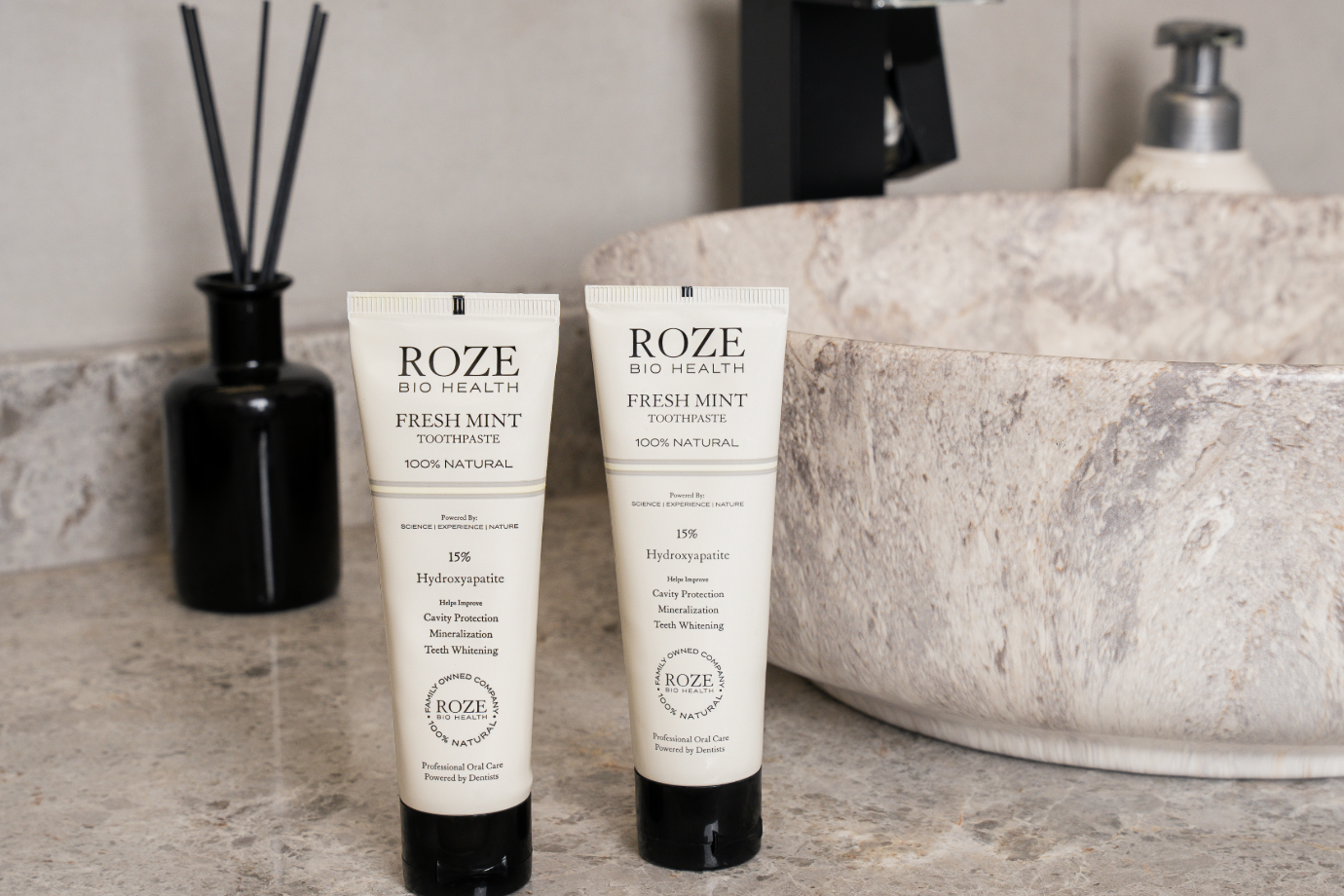
What has changed is that clinicians now have a credible, evidence-informed alternative to discuss with patients who want one, rather than simply telling them there is no other option. Dr. David Roze, a biological dentist with over 13 years of clinical practice in Dubai, has watched this shift from inside the operatory. He founded ROZE BioHealth after searching, largely without success, for a fluoride-free toothpaste he felt comfortable recommending to his own patients and using with his own children.
What hydroxyapatite actually is
Hydroxyapatite is not a novel ingredient invented for marketing purposes. It is the naturally occurring mineral that makes up roughly ninety-six percent of tooth enamel and around seventy percent of dentine and bone. In its microscopic form, known as micro-hydroxyapatite, it has been used in Japanese oral care products for more than forty years, originally after researchers observed it was well tolerated by the body during other medical applications. Because it is essentially the same material teeth are already made of, it is considered highly biocompatible.
When applied to the tooth surface through brushing, micro-hydroxyapatite particles are widely understood to bind to areas of weakened or demineralised enamel, helping to fill in microscopic rough patches and support the natural remineralisation process. This is a meaningfully different mechanism from fluoride, which works primarily by making existing enamel more resistant to acid.
Why more dentists are open to recommending it
Biological and holistic dentists were early adopters of hydroxyapatite toothpaste, largely because it let them offer patients who were fluoride-averse an option grounded in genuine science rather than folk remedies. What has changed more recently is that mainstream clinicians, not just biological dentists, are increasingly comfortable suggesting it for specific situations: a patient with sensitivity that has not responded well to other products, a parent anxious about a young child swallowing toothpaste, or simply an adult who wants to reduce their overall exposure to synthetic ingredients without compromising on enamel care.
It also helps that hydroxyapatite toothpaste tends to come from formulations that skip several other ingredients dentists are increasingly asked about, including sodium lauryl sulfate (SLS), parabens, artificial colours, and microplastics. A toothpaste built around a remineralising mineral rather than a foaming detergent naturally lends itself to a shorter, cleaner ingredient list.
Fluoride and hydroxyapatite, compared honestly
Neither ingredient is universally superior. Both are legitimate approaches to supporting enamel, and the right choice often depends on personal circumstances, risk factors, and preference. The table below sets out how they generally compare.
| Factor | Fluoride | Hydroxyapatite |
|---|---|---|
| Remineralisation | Strengthens existing enamel against acid, well studied over decades | Helps rebuild and fill microscopic surface imperfections in enamel |
| Sensitivity support | Can help with sensitivity in some formulations | May help occlude open dentinal tubules linked to sensitivity |
| Safety if swallowed | Requires careful dosing in young children, ingestion in excess is a recognised concern | Food-grade in most formulations, generally considered safe if swallowed in small amounts |
| Enamel compatibility | Not a natural component of enamel | Chemically similar to the mineral enamel is made of |
| Family suitability | Endorsed by many dental bodies for general use with guidance on dosage for children | Widely used for children and during pregnancy where a fluoride-free option is preferred |
Who tends to benefit most from switching
Sensitive teeth
People whose sensitivity has not improved with conventional desensitising toothpaste sometimes find a hydroxyapatite formula more comfortable, as the mineral is thought to physically occlude the tiny channels in dentine that transmit sensation to the nerve.
Young children
Because most hydroxyapatite formulas are food-grade, they are often recommended for toddlers who have not yet mastered spitting out toothpaste, removing the anxiety around fluoride ingestion during the early years of brushing.
People prioritising the oral microbiome
A remineralising toothpaste for kids and adults alike ideally works with the mouth’s natural bacterial balance rather than against it. Hydroxyapatite formulas are typically alkaline and are not built around harsh antibacterial or foaming agents, which some dentists now consider gentler on the microbiome over the long term.
What to look for if you are considering a switch
- Check the concentration of hydroxyapatite. Some products include only a token amount; a clinically meaningful concentration is generally considered to be in the region of ten percent or higher.
- Look for micro-hydroxyapatite specifically, as particle size affects how well it interacts with the tooth surface.
- Confirm the toothpaste is also free from SLS and artificial sweeteners if reducing overall synthetic exposure is part of your goal.
- Speak with your own dentist about your specific risk factors, particularly if you have a history of frequent cavities, before making a permanent switch.
Frequently asked questions
Does hydroxyapatite really rebuild enamel?
It is widely understood to support the natural remineralisation process by binding to weakened areas of the enamel surface. It is not a cure for existing decay and does not reverse a cavity that has already formed, but it can help support enamel strength as part of a consistent oral care routine.
Is fluoride-free toothpaste effective against cavities?
Hydroxyapatite-based fluoride-free toothpaste is generally considered effective as part of good oral hygiene, though as with any toothpaste, technique, frequency, diet, and regular dental visits all continue to matter.
Is hydroxyapatite toothpaste safe for children?
Most hydroxyapatite formulas are food-grade and are widely used for children, including those too young to reliably spit, though a dentist should always be consulted for a child’s specific needs.
How long does it take to notice a difference?
Many people report improvements in sensitivity or a smoother feeling to the teeth within a few weeks of consistent use, though remineralisation is a gradual biological process rather than an overnight change.
The takeaway
What has genuinely changed is that hydroxyapatite has earned a legitimate place alongside it in clinical conversations, backed by decades of use and a mechanism that makes intuitive sense: rebuilding enamel with the same mineral it is already made from. For readers who want to explore this approach with a dentist-formulated option, Natural Fresh Mint Toothpaste from ROZE BioHealth is one place to start, though the most important step is always an honest conversation with your own dentist about what your teeth actually need.