

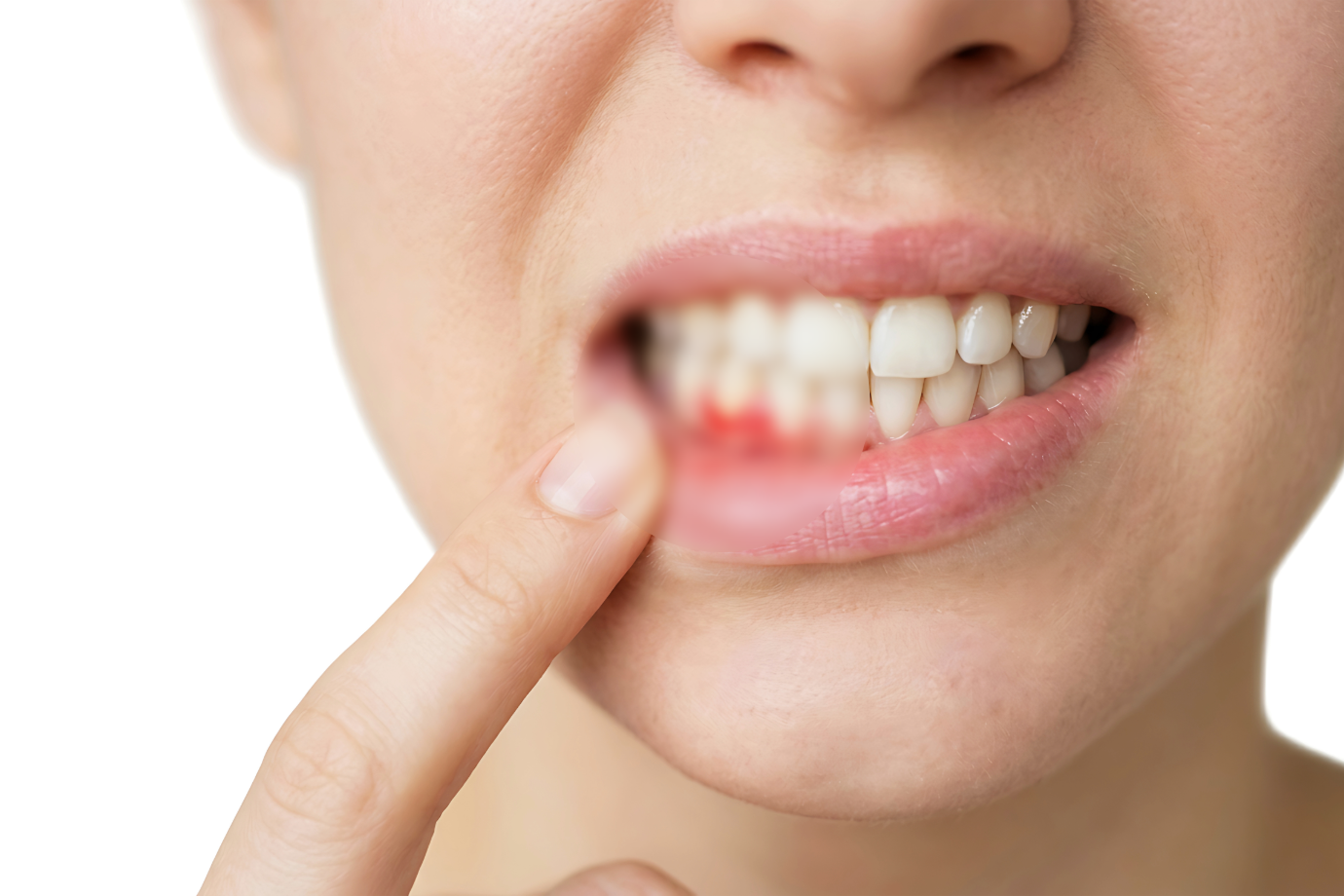
You rinse, glance down, and there it is: a streak of pink in the sink. Bleeding gums when brushing is one of the most common things people notice about their mouths, and one of the most commonly ignored. It rarely hurts, it usually stops within a minute, and so it is easy to file away as normal. It is not normal, though it is very often reversible.
This article explains what that bleeding is usually telling you, which everyday habits make it worse, and the signs that mean it is time to book a dental visit rather than wait. It reflects the clinical perspective behind ROZE BioHealth, which was created by Dr. David Roze, a biological dentist with 13+ years of clinical practice in Dubai. In his surgery, bleeding gums are one of the earliest and most useful signals a patient can bring in, precisely because they tend to appear long before anything hurts.
Why healthy gums should not bleed
Healthy gum tissue is firm, pale pink, and fits snugly around each tooth like a cuff. It can tolerate a toothbrush, floss and the occasional crisp crust of bread without bleeding. When gums bleed under that kind of ordinary contact, it is a sign the tissue has become inflamed.
Inflammation brings extra blood to the area. The tiny vessels near the gum surface swell and become fragile, so even light pressure is enough to make them leak. In other words, the brush is not the cause of the problem. It is simply revealing a problem that was already there.
The most common cause of bleeding gums when brushing
In the large majority of cases, bleeding gums when brushing point to gingivitis, the earliest stage of gum disease. It begins with plaque, the soft, sticky film of bacteria that builds up along the gumline every day. If plaque is not cleared thoroughly, the gum tissue beside it reacts with redness, mild swelling and bleeding.
The encouraging news is that gingivitis is generally reversible. Because it affects only the gum tissue and not the bone beneath, consistent cleaning can allow the gums to settle back to health, often within a couple of weeks. Many patients are surprised by how quickly the bleeding fades once plaque is removed properly every day.
Left unattended for months or years, however, gingivitis can progress to periodontitis. At that stage, plaque hardens into tartar below the gumline, the gum begins to pull away from the tooth, and the supporting bone can be gradually lost. Periodontitis can be managed, but the damage it causes is much harder to undo. That is why early bleeding deserves attention.
Other reasons your gums may bleed
Gingivitis is the usual suspect, but it is not the only one. A few other factors can cause or worsen bleeding, sometimes alongside plaque.
Brushing too hard or with the wrong brush
A firm-bristled brush and a heavy, scrubbing hand can bruise the gum and wear it back over time. More force does not mean cleaner teeth. Gentle, angled strokes with a soft brush remove plaque just as well and are far kinder to the tissue. If you are switching, look for a brush with ultra-soft, densely packed bristles, such as the Bamboo Adult Toothbrush Nano, which lets the bristles reach the gumline without pressing hard against tender tissue.
Starting to floss again
If you have just begun cleaning between your teeth, a little bleeding in the first week or so is common. It usually reflects the inflammation that was already hiding between the teeth. Keep going gently, and the bleeding should ease as the gums heal.
Hormonal changes
Pregnancy in particular can make gums more reactive to plaque, a pattern often called pregnancy gingivitis. Puberty and other hormonal shifts can have a similar effect. Good daily care and a dental check-up during pregnancy are both worthwhile.
Medications and health conditions
Blood-thinning medicines can make gums bleed more readily. Diabetes is closely linked with gum inflammation, and poorly controlled blood sugar can make gum problems more likely and slower to settle. Some other medicines and conditions affect the gums too. If you take regular medication, mention it to your dentist, and never stop a prescribed medicine without speaking to your doctor.
Nutrition and lifestyle
A diet very low in vitamin C can contribute to fragile, bleeding gums, although this is uncommon with a varied diet. Smoking is a more frequent factor and a deceptive one: it reduces blood flow to the gums, which can mask bleeding even while gum disease quietly progresses.
Reading the pattern: what your bleeding may suggest
No table can replace an examination, but the pattern of bleeding often offers useful clues about what is going on.
| What you notice | What it may suggest | Sensible next step |
|---|---|---|
| Light bleeding in one or two areas, no pain | Early gingivitis where plaque is being missed | Improve technique there and clean between teeth daily for two weeks |
| Bleeding only in the first days of flossing | Existing inflammation between teeth starting to heal | Continue gently; it should ease within a week or two |
| Bleeding with gums that look red, puffy or shiny | Established gum inflammation | Book a dental check-up and professional clean |
| Bleeding with receding gums, bad taste or loose teeth | Possible periodontitis | See a dentist promptly for a gum assessment |
| Bleeding without brushing, or with bruising elsewhere | A possible issue beyond the mouth | Contact your doctor or dentist without delay |
When to see a dentist about bleeding gums
A short, honest rule of thumb: if your gums still bleed after two weeks of careful, gentle brushing twice a day and daily cleaning between your teeth, it is time for a professional look. Tartar cannot be brushed away at home, and a dentist or hygienist can remove it and check the depth of the gum pockets around each tooth.
You should book sooner if you notice any of the following:
- Gums that are swollen, tender, or deep red rather than pink
- Gums that seem to be shrinking back, making teeth look longer
- Persistent bad breath or an unpleasant taste that does not go away
- Pus between the teeth and gums
- Teeth that feel loose or have started to shift
- Bleeding during pregnancy, or alongside diabetes
Seek advice urgently if bleeding is heavy, happens spontaneously without any brushing, or comes with unexplained bruising, fever or feeling generally unwell. These are uncommon, but they warrant prompt medical attention.
What helps at home
For most people with early gum inflammation, the answer is a calmer, more thorough routine rather than a more aggressive one.
Keep brushing, but gently
The instinct to avoid a bleeding area is understandable, yet it is exactly the wrong move. Plaque left in place keeps the inflammation going. Brush twice a day for two minutes with a soft brush, angling the bristles towards the gumline and using small, gentle circles. An ultra-soft nano-bristle brush such as the ROZE Bamboo Adult Toothbrush Nano is designed for exactly this kind of gentle technique, cleaning along the gumline while massaging the gums rather than scrubbing them. It is also included in the Dental Kit.
Clean between your teeth every day
Floss, interdental brushes or a water flosser all have their place. The best tool is the one you will use properly every evening. Expect some bleeding at first, and expect it to fade.
Choose a gentle toothpaste
Some people with reactive gums find that strong foaming agents and intense mint flavours leave the mouth feeling stripped or irritated. A natural toothpaste without SLS, made with a mild flavour and a balanced pH, can make the daily routine more comfortable, which in turn makes it easier to stay consistent. Many dentists also favour formulas that support enamel at the gumline, where receding tissue can expose more sensitive surfaces.
Support your gums from the inside
A varied diet rich in vegetables and fruit, staying well hydrated, limiting frequent sugary snacks, and stopping smoking all contribute to healthier gum tissue. None of these is a quick fix, but together they create the conditions in which gums can recover.
Where hydroxyapatite fits in
Hydroxyapatite will not treat gum disease, and no toothpaste can replace plaque removal or professional care. Its role is supportive. As the same mineral that makes up most of your enamel, it helps to remineralise tooth surfaces and can ease the sensitivity that often appears when gums recede and expose the softer root surface beneath.
This is part of why Dr. Roze formulated ROZE with 15% micro-hydroxyapatite, an alkaline pH, and a free-from list that excludes SLS, artificial colours and artificial sweeteners. For patients working to calm their gums, a toothpaste that feels gentle and supports the teeth themselves can be a comfortable companion to good technique. The Natural Fresh Mint Toothpaste offers a familiar fresh taste without harsh additives.
Frequently asked questions
Should I stop brushing if my gums bleed?
No. Stopping allows plaque to build up further, which tends to make bleeding worse. Switch to an ultra-soft brush, such as a nano-bristle toothbrush,, use a gentle technique, and keep going. If the bleeding has not improved after about two weeks, see your dentist.
Is it normal for gums to bleed a little every day?
It is common, but it is not a sign of healthy gums. Regular bleeding usually indicates inflammation, most often early gingivitis, which is generally reversible with good daily care and a professional clean where needed.
How long does it take for bleeding gums to stop?
For mild gingivitis, many people notice a clear improvement within one to two weeks of consistent brushing and interdental cleaning. If tartar is present, a professional clean is usually needed before the gums can fully settle.
Can a mouthwash fix bleeding gums?
A mouthwash cannot remove established plaque or tartar, so it is not a substitute for brushing and cleaning between teeth. Some people find strong alcohol-based rinses drying or irritating. Ask your dentist whether a rinse makes sense for your situation.
Is hydroxyapatite toothpaste suitable if my gums are sensitive?
Many people with sensitive gums and teeth use hydroxyapatite toothpaste comfortably every day. It is gentle, food-grade and does not need rinsing out. It supports enamel and can help reduce sensitivity, while gum health itself still depends on thorough plaque removal.
What kind of toothbrush is best for bleeding gums?
A soft or ultra-soft brush with a small head is usually the kindest choice for inflamed gums. Nano-bristle brushes have very fine, densely packed filaments, so they can clean plaque along the gumline with less pressure. Replace your brush every three months, or sooner if the bristles splay. The brush matters less than the technique: gentle, angled strokes twice a day.
The takeaway
Bleeding gums when brushing are best understood as an early message rather than a crisis. Most of the time they point to gum inflammation that responds well to gentle, thorough cleaning, and the sooner you respond, the easier it is to reverse. If the bleeding persists beyond two weeks, or arrives with swelling, receding gums or loose teeth, a dental visit is the right next step.
The view of the ROZE Clinical Team is that a calm, consistent routine does more for your gums than any single product. For those who would like that routine built around a dentist-formulated, fluoride-free toothpaste, ROZE’s range offers one considered place to start.