

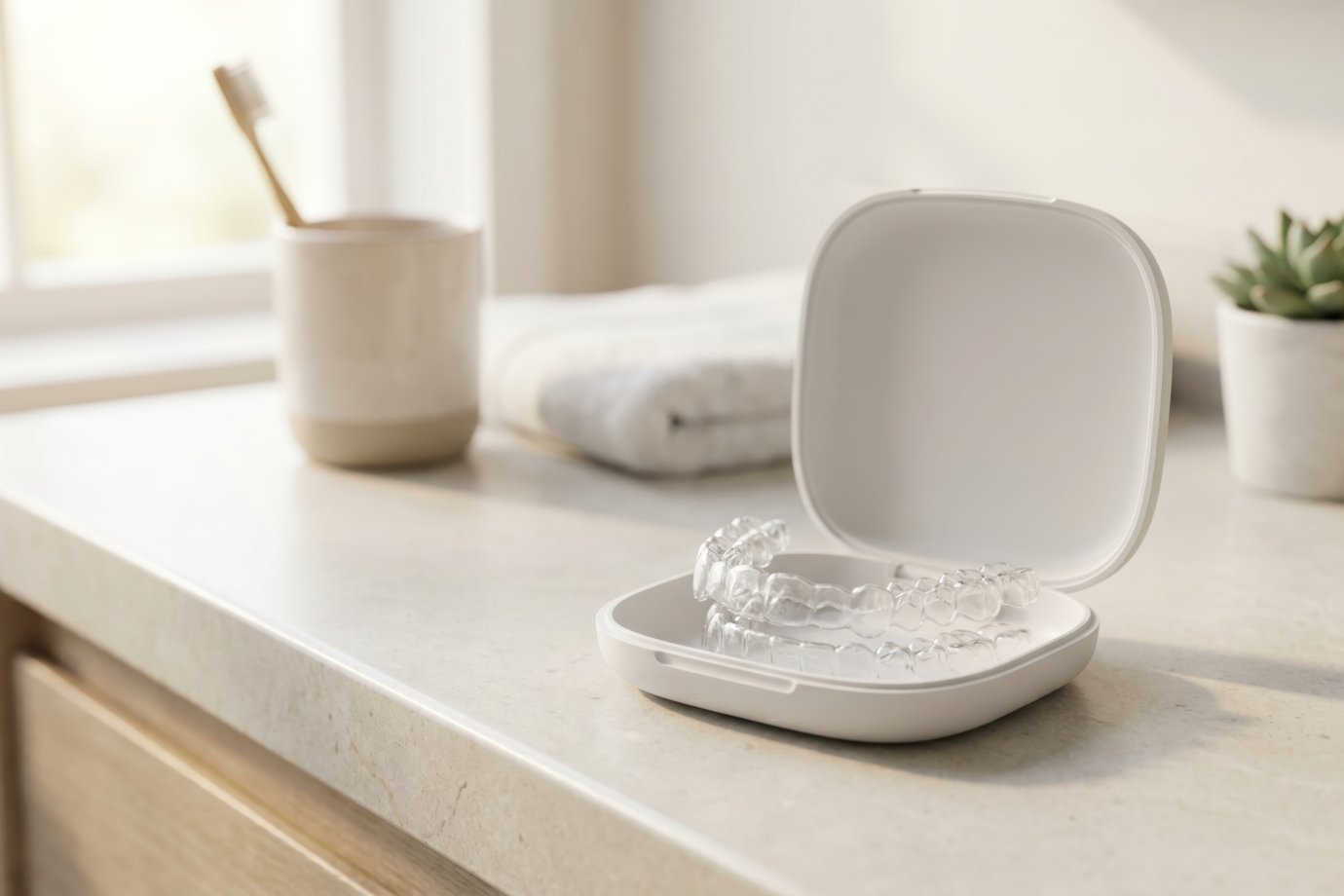
You were told to wear your trays for 22 hours a day, and you do. You change to the next set on schedule and you attend your check-ups. So why does your orthodontist still mention white marks, bleeding gums or a smell that follows the trays around? In our experience, clear aligner hygiene is where good intentions most often go quietly wrong. Dr. David Roze, a biological dentist with 13+ years of clinical practice in Dubai and the founder of ROZE BioHealth, sees the same patterns repeatedly in patients who are otherwise diligent. The trays are not the problem. The routine around them usually is.
Why aligners change the rules of oral hygiene
Traditional braces are visible and obvious, so people tend to clean around them carefully. Clear aligners are discreet, removable and comfortable, which makes it easy to treat them as something that needs very little maintenance. Yet a tray that sits snugly over your teeth for most of the day creates a small, enclosed environment.
Saliva normally washes over enamel constantly. It neutralises acids, delivers minerals and rinses away food debris. Under an aligner, that flow is reduced. Anything trapped between the tray and the tooth, whether plaque, sugar or acid from a drink, stays in close contact with enamel for longer than it otherwise would. That is why the habits that were good enough before treatment may no longer be enough during it.
The five mistakes we see most often
1. Putting trays back in without brushing
This is the single most common error. After a meal, it is tempting to pop the aligners straight back in. If teeth are not cleaned first, food particles and plaque are pressed against enamel for hours. When brushing is not possible, rinse thoroughly with water and brush at the earliest opportunity. A small travel toothbrush kept in a bag or desk drawer makes this far more realistic.
2. Drinking anything other than water with trays in
Coffee, tea, juice, fizzy drinks and sports drinks can pool under the tray. Sugar feeds plaque bacteria, and acidic drinks soften the surface of enamel, which is then held in contact with that acid. Tea and coffee may also stain the trays themselves. The simple rule is to remove the aligners for anything but plain water, then clean your teeth or at least rinse before replacing them.
3. Cleaning the trays with the wrong tools
Hot water can warp plastic, and abrasive toothpaste can scratch the surface of a tray, leaving microscopic grooves where bacteria settle and cloudiness develops. Using the same coarse, heavily whitening paste on both teeth and trays is a frequent culprit. A soft brush, lukewarm water and a mild, non-abrasive cleanser are kinder. Many orthodontists also recommend occasional soaking in a purpose-made aligner cleaner.
4. Skipping the space between teeth
Aligners move teeth into new positions, and crowded or overlapping areas may be tighter during the early stages. That is precisely where plaque collects. Interdental brushes or floss once a day, ideally in the evening before the final tray goes in, help maintain gum health through treatment.
5. Overlooking sensitivity and dryness
Mild tenderness when you switch trays is common and usually settles within a few days. But persistent sensitivity, or a dry mouth that makes trays feel sticky, should not be ignored. Teeth under pressure and reduced saliva can both increase vulnerability to demineralisation, which shows up as chalky white patches on the enamel.
A routine that works in real life
Perfect routines fail on busy days, so the aim is a sequence you can repeat without thinking. Here is a practical outline.
- Morning: Remove the trays and rinse them. Brush your teeth, clean between them, then brush the trays gently with a soft brush and cool water. Put on a clean pair after breakfast, not before.
- Through the day: Keep trays in their case whenever they are out, never in a napkin, which is how many are accidentally thrown away. Drink water freely with trays in, and nothing else.
- After meals and snacks: Remove, brush or rinse, then replace. Aim to avoid grazing, since every snack is another round of exposure.
- Evening: Brush thoroughly for two minutes, clean between teeth, clean the trays and wear the next set overnight as directed.
- Weekly: Give the trays a deeper clean with an aligner-safe cleanser and check the case itself, which can harbour bacteria if it is never washed.
Tray care at a glance
| Habit | Gentler choice | Why it matters |
|---|---|---|
| Water temperature | Cool or lukewarm | Hot water can distort the plastic and affect fit |
| Cleaning tool | Soft brush | Hard bristles scratch the surface and hold bacteria |
| Paste on the trays | Mild, non-abrasive cleanser | Abrasive pastes can cloud and roughen the tray |
| Drinks with trays in | Plain water only | Sugar and acid are held against enamel |
| Storage | Ventilated case | Prevents loss and limits bacterial build-up |
| Dry mouth | Sip water, mention it at check-ups | Less saliva means less natural protection |
Choosing a toothpaste during aligner treatment
Because trays hold whatever is on your teeth against them, it makes sense to think about what that is. Heavily foaming pastes, strong flavourings and abrasive whitening agents are not ideal companions to a plastic tray worn for most of the day. Residue left behind after brushing can also remain under the aligner.
A hydroxyapatite toothpaste is a thoughtful option for many aligner wearers. Hydroxyapatite is the mineral enamel is largely built from, and in toothpaste form it can help remineralise the surface and support the enamel that may be under extra pressure from reduced saliva. It can also help ease the sensitivity some people feel after changing trays, and, because it works by filling surface imperfections rather than bleaching, it contributes to a smoother, brighter-looking surface without abrasion.
For those who prefer to keep fluoride out of their routine, as ROZE does by conviction, a hydroxyapatite formula is the natural alternative: a food-grade mineral that does not need rinsing away, which is a quiet advantage when you are brushing quickly before putting trays back in. ROZE’s Natural Fresh Mint Toothpaste contains 15% clinical-grade micro-hydroxyapatite and is free from SLS, parabens, artificial colours and artificial sweeteners. Whatever you use, a small pea-sized amount is enough, and your orthodontist should always have the final say on products used alongside your treatment.
Whitening during aligner treatment
Many patients hope that straighter teeth will also look brighter. Be cautious about layering whitening gels or strong abrasive pastes on top of aligner treatment, especially if your teeth are already sensitive. Gentle surface polishing from a hydroxyapatite paste and a professional clean at the end of treatment are usually kinder first steps. If you want to whiten, ask your dentist when and how.
When to speak up
Contact your orthodontist or dentist if you notice any of the following:
- Gums that bleed regularly or look swollen and red
- Chalky white patches or new dark spots on teeth
- Persistent bad breath that brushing does not resolve
- Trays that no longer fit snugly or that crack
- Sensitivity that lasts beyond a few days after a tray change
Early attention is almost always simpler, and most of these issues are far easier to address within weeks than months.
Frequently asked questions
Can I use ordinary toothpaste with clear aligners?
Yes for your teeth, but be mindful of abrasive or heavily whitening formulas, and avoid using them to scrub the trays themselves. A mild, non-abrasive option is usually better for both.
Should I brush before putting my aligners back in?
Ideally, yes. If that is not possible, rinse well with water and brush as soon as you can. Putting trays over unclean teeth traps plaque against enamel.
Can I drink coffee or tea while wearing aligners?
It is best to remove them. Hot drinks can distort the tray and stain it, and sugar or acid can sit beneath it. Replace them after you have rinsed or brushed.
Why do my aligners smell or look cloudy?
Usually this reflects bacterial film, mineral deposits or scratches from abrasive cleaning. Gentle daily brushing, lukewarm water and an aligner-safe cleaner typically help. If the cloudiness persists, ask your orthodontist whether a replacement is appropriate.
Is hydroxyapatite toothpaste suitable for aligner wearers?
Many people find it a gentle fit because it is non-abrasive and supports enamel. As always, check with your orthodontist about anything you use throughout treatment.
Expert takeaway
Clear aligners are a remarkable tool, but they work best on healthy, well-cared-for teeth. Brush before trays go back in, keep drinks to water, clean the trays gently, and give the spaces between teeth daily attention. These small adjustments protect the enamel and gums you are investing in.
If you are exploring a fluoride-free, dentist-formulated option to sit alongside your routine, ROZE’s range is one place to begin, and your orthodontist remains the best guide to your own treatment.