

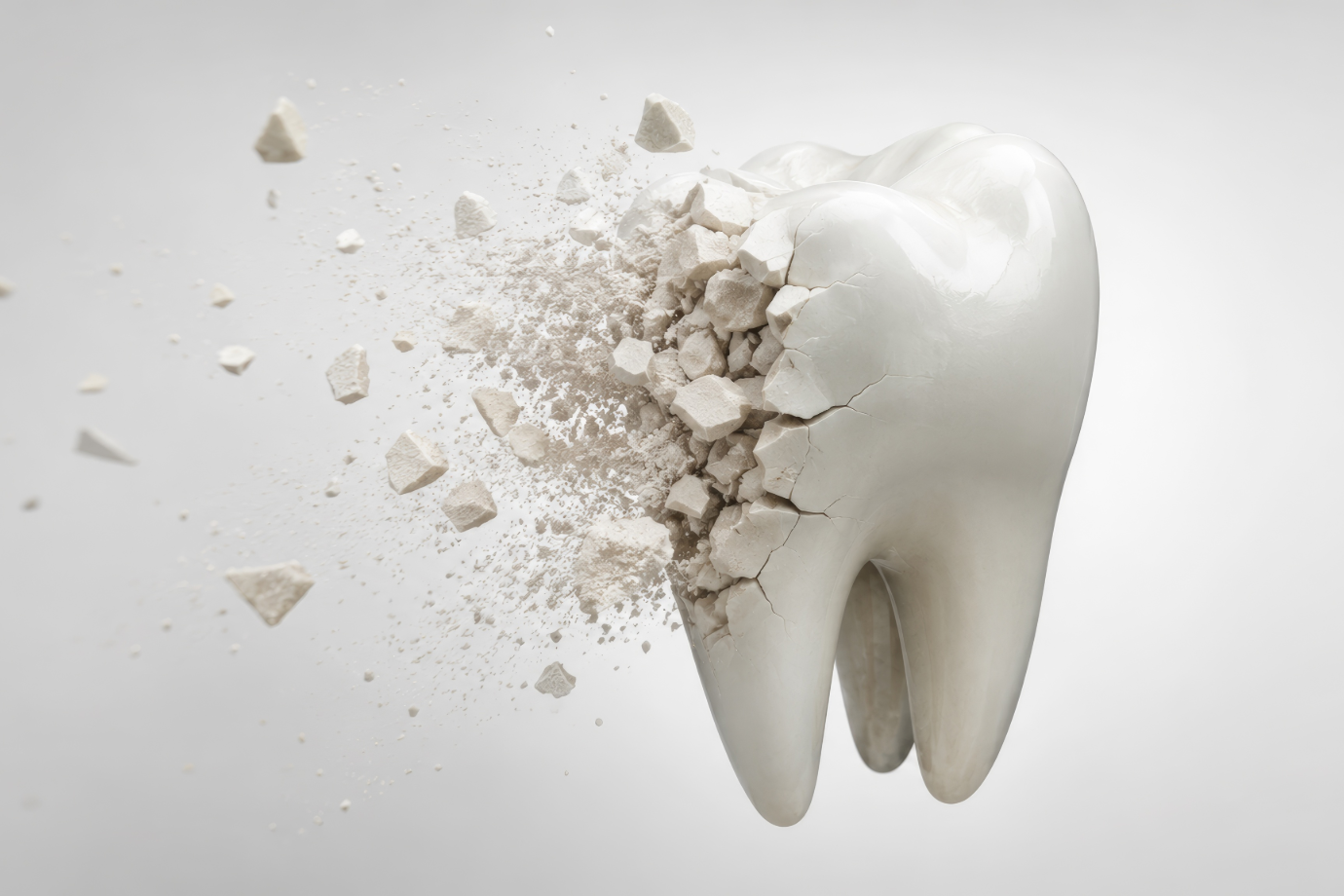
Some of the most damaging habits for your teeth have nothing to do with sugar
Most people already know that sweets and fizzy drinks are hard on teeth. Far fewer realise that some of their most routine, unthinking habits, the ones that have nothing to do with diet at all, are doing quiet damage every single day. These habits rarely cause pain at first, which is exactly why they go unnoticed until a dentist points out the wear.
Dr. David Roze, a biological dentist with more than 13 years treating patients in Dubai and the founder of ROZE BioHealth, notes that many of the cases he sees are not caused by neglect at all. They come from small, repeated actions that feel harmless in the moment.
Habit one: brushing too hard, too often
More pressure does not mean cleaner teeth. Scrubbing with a hard-bristled brush or excessive force wears away enamel at the gumline over time and can contribute to gum recession, which exposes the more sensitive root surface underneath. The fix is straightforward: a soft-bristled brush, gentle circular motions, and letting the toothpaste and technique do the work rather than pressure.
Habit two: using teeth as tools
Opening a bag of crisps, tearing a tag off clothing, holding a bobby pin between your teeth while you fix your hair. These small moments put sudden, uneven force on teeth that were never designed for it, and they are a common cause of chips and cracks that show up seemingly out of nowhere. Keeping scissors nearby sounds almost too simple to matter, but it genuinely prevents a category of dental injury that is otherwise entirely avoidable.
Habit three: chewing ice or very hard foods
Ice feels harmless because it is just frozen water, but it is hard enough to crack enamel or an existing filling, particularly at the back molars. The same applies to biting down on hard sweets, unpopped popcorn kernels or pen caps. If you enjoy cold drinks, letting the ice melt rather than crunching it protects against damage that often is not immediately obvious.
Habit four: grinding or clenching, especially at night
Bruxism, the habit of grinding or clenching teeth, often happens during sleep, which means many people are entirely unaware they are doing it until a dentist notices flattened or worn tooth surfaces. Stress is a common trigger. A dentist can assess whether a night guard is appropriate, and addressing the underlying stress, where possible, helps as well.
Habit five: constant sipping and grazing
Sipping a sugary or acidic drink slowly across an hour does more damage than drinking the same amount quickly, because it keeps the mouth in an acidic state for much longer. The same logic applies to frequent snacking throughout the day. Teeth need windows of recovery between exposures, when saliva can neutralise acid and begin remineralising the surface. Concentrating drinks and snacks into set times, rather than grazing continuously, gives the mouth that recovery window.
Habit six: chewing on one side of your mouth only
Favouring one side, often without noticing, can happen because of an old cavity, a sensitive tooth or simply habit. Over time this uneven use wears one side more than the other and can contribute to jaw imbalance and additional wear on the overworked teeth. If you notice yourself consistently chewing on one side, it is worth asking a dentist whether a specific tooth is the reason, since treating that cause resolves the habit far more reliably than consciously trying to switch sides.
Habit seven: keeping the same toothbrush for too long
A toothbrush with frayed, splayed bristles cleans noticeably less effectively than a fresh one, yet it is easy to keep using the same brush for months past its useful life. Worn bristles can also be rougher on the gumline than a fresh, soft-bristled brush. Replacing a toothbrush roughly every three months, or sooner if the bristles look worn, is a small habit that keeps the rest of a good routine actually working as intended.
Habit eight: overlooking what is actually in your toothpaste
This one is easy to miss because it looks like the opposite of a bad habit. Brushing twice a day is good practice, but the formula doing the work matters. Many mainstream toothpastes rely on synthetic detergents like SLS, artificial sweeteners and colours, and fluoride as a surface-level defence, layered onto teeth rather than genuinely rebuilding them. Reading the ingredient label with the same attention you would give a food product is a habit worth building. Look for a fluoride-free Natural Toothpaste built around hydroxyapatite, the mineral that already forms roughly 97 percent of natural enamel, rather than one leaning on a longer list of synthetic additives.
A gentler routine for the whole family
Many of these habits start young: nail biting, ice chewing and heavy-handed brushing are often picked up in childhood and carried into adulthood unchanged. A child who is never shown a gentle brushing technique, or who is given a toothpaste that tastes harsh enough to make brushing a battle, is far more likely to develop the very habits described above by the time they reach adulthood. Building a gentler routine early, with a toothpaste for kids genuinely suitable for children, such as the family-friendly Watermelon Toothpaste, makes it easier to establish good technique and a positive relationship with brushing before harder habits take hold.
Frequently asked questions
Is it too late to reverse enamel wear from years of hard brushing?
Enamel that has already worn away does not regrow on its own, but a remineralising routine can help strengthen and protect what remains, and switching to a soft brush and gentler technique prevents further loss.
How do I know if I grind my teeth at night?
Common signs include waking with jaw soreness or headaches, and a dentist can often spot the flattened wear pattern on the teeth during a routine check-up, even before you notice symptoms yourself.
Is fluoride-free toothpaste as effective as fluoride toothpaste for habits like these?
A hydroxyapatite-based, fluoride-free toothpaste can help support enamel strength and reduce sensitivity from habits like grinding or over-brushing, working by rebuilding the mineral structure of the tooth rather than adding a synthetic surface coating, and without the trace amount that is otherwise swallowed with every brush.
Are sugar-free drinks safe to sip throughout the day?
Many sugar-free drinks are still acidic, which can soften enamel with prolonged exposure even without sugar involved. Moderating how often you sip, rather than only what you sip, makes a meaningful difference.
What is the single easiest habit to change first?
Switching to a soft-bristled brush with gentle pressure is usually the simplest change with an immediate, noticeable benefit, and it requires no adjustment to diet or daily schedule.
How often should a toothbrush really be replaced?
Roughly every three months for most people, or sooner if the bristles are visibly frayed or you have recently been unwell, since a worn brush cleans less effectively and can be rougher on the gums.
The takeaway
None of these habits feel significant in the moment, which is precisely why they cause so much cumulative damage. Paying attention to the small, repeated things, how hard you brush, what you chew, how often you sip, and what is actually in your toothpaste, does more for long-term oral health than any single dramatic change. For families looking to build gentler habits from the start, ROZE’s fluoride-free range offers a considered, dentist-formulated place to begin.