

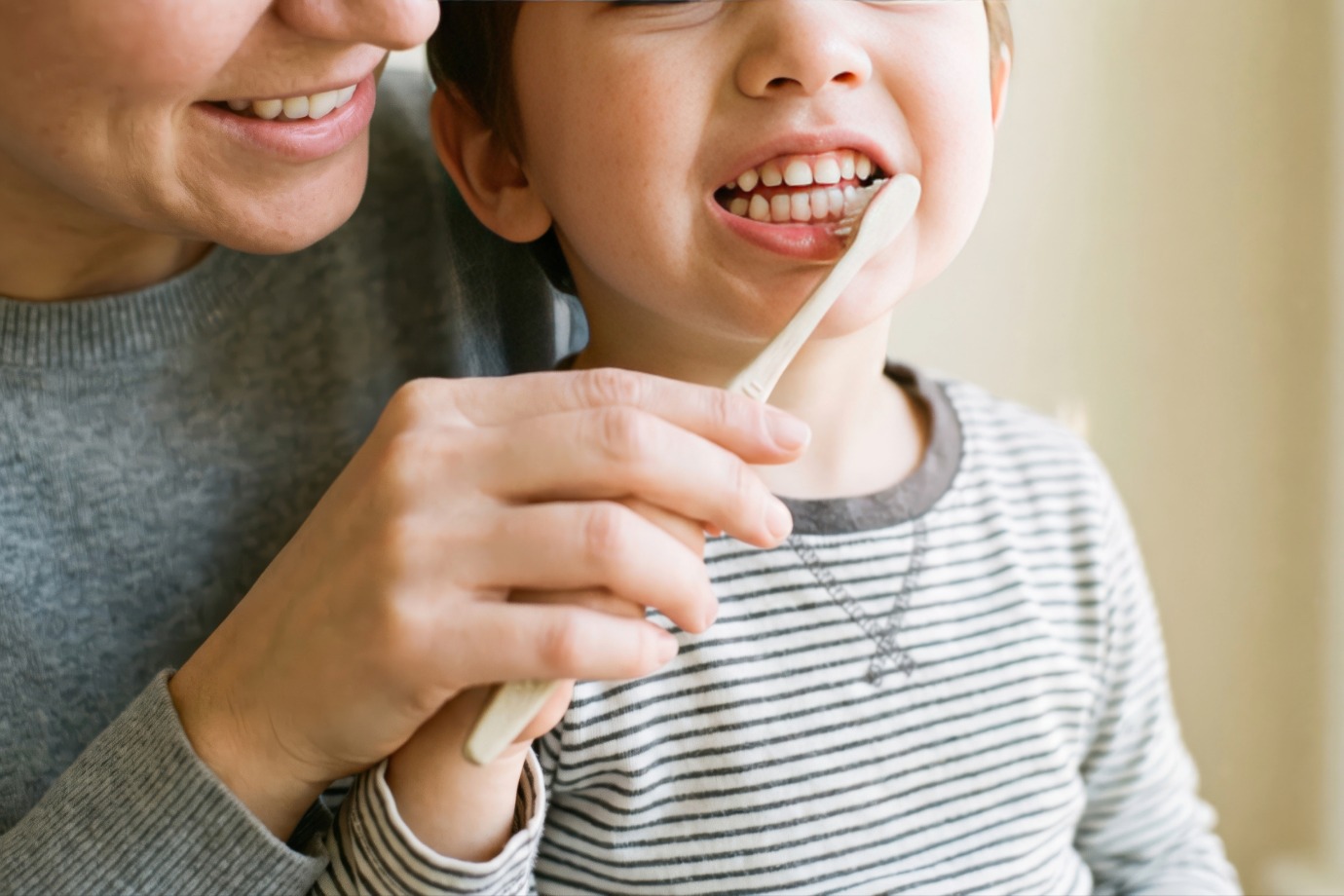
Where healthy habits for life actually begin
The foundation for a lifetime of healthy teeth is laid remarkably early, often before a child has said their first full sentence. The habits, routines, and even the flavours a child associates with brushing in their first few years tend to shape how they feel about oral care well into adulthood. Building this foundation well does not require complicated routines. It requires consistency, the right technique for each age, and products genuinely suited to a developing mouth.
Dr. David Roze, a biological dentist with 13+ years of clinical practice in Dubai, has built much of ROZE BioHealth’s approach around exactly this idea: he wanted a toothpaste gentle and safe enough to use on his own children, without hesitation about what they might swallow along the way.
Baby teeth matter more than most parents realise
It is a common misconception that baby teeth do not need serious attention because they will eventually fall out. In reality, baby teeth hold space for adult teeth, guide healthy jaw development, and support a child’s ability to chew and speak clearly. Decay or early loss of baby teeth can affect all three. Caring for them well from the start is not a formality, it genuinely shapes the mouth a child grows into.
A practical guide by age
From the first tooth to age three
Brushing should begin as soon as the first tooth appears, typically using a soft, tiny, age-appropriate brush and a rice-grain-sized amount of toothpaste. At this age, children reliably swallow most of what goes into their mouth, which makes the composition of their toothpaste especially important, not an afterthought.
Ages three to six
Children can usually manage a pea-sized amount of toothpaste and should be encouraged to spit rather than swallow, though some ingestion is still completely normal and expected at this stage. This is the age to start building the twice-daily habit as something automatic rather than negotiated, ideally with a parent brushing alongside or supervising closely.
Ages six and up
As motor skills improve, children can take on more independence, though supervision until around age seven or eight is still generally recommended to ensure they are covering all surfaces and brushing for a full two minutes.
Choosing a toothpaste for kids: what actually matters
Not every toothpaste marketed for children is designed with a child’s biology in mind. A few things are worth prioritising.
- Swallow safety. Because young children swallow a meaningful portion of what they brush with, a food-grade, non-toxic formula matters more here than almost anywhere else in a household’s oral care routine.
- Gentle, appealing flavour. A flavour children genuinely enjoy, without relying on artificial sweeteners or harsh mint, makes brushing something they look forward to rather than resist.
- No unnecessary additives. Artificial colours, synthetic sweeteners, and SLS offer no benefit to a child’s oral health and are easy to avoid with the right formula.
- Support for developing enamel. Children’s enamel is still maturing, and a toothpaste that supports remineralisation gives it a genuine head start.
The fluoride question, from a parent’s perspective
Fluoride has long been the default in children’s toothpaste, but it is worth understanding what that default actually means in practice. Fluoride is a synthetic additive, and because young children reliably swallow a portion of whatever they brush with, this is precisely the population most exposed to it, twice a day, for years. Hydroxyapatite offers a meaningfully different approach: it is the same mineral that naturally makes up tooth enamel, it is food-grade, and it is considered safe even when swallowed, which matters enormously for a three-year-old who has not yet mastered spitting.
Rather than asking whether a child’s toothpaste works, it is worth asking what exactly a child is swallowing twice a day, and whether there is a gentler option that does the same job. For a growing number of parents, the answer is a fluoride-free, hydroxyapatite-based formula.
A few things worth checking on any children’s toothpaste label:
- Is the active ingredient fluoride, or a natural mineral such as hydroxyapatite?
- Does the ingredient list include SLS, artificial sweeteners, or synthetic colours?
- Is the formula explicitly stated as safe if swallowed?
- Is the flavour genuinely appealing to a child, to encourage a willing, consistent habit?
Building the habit, not just the routine
Getting a young child to brush willingly is often less about the toothpaste and more about the ritual around it. Letting a child choose their own toothbrush, brushing alongside them so they can copy the motion, using a two-minute song or timer, and offering calm, matter-of-fact encouragement rather than pressure all help turn brushing into something a child does with you, rather than something done to them.
For families looking for a gentle, all-in-one starting point, ROZE’s Watermelon Toothpaste was created specifically with children and families in mind: a flavour kids tend to genuinely enjoy, paired with the same 15% micro-hydroxyapatite formulation used across the ROZE range, and free from fluoride, SLS, and artificial additives.
Diet and the bigger picture
Toothpaste and brushing technique are only part of the picture. Frequent snacking on sugary or starchy foods, especially sticky ones that linger on teeth, gives bacteria more opportunities to produce the acid that drives decay. Water as the default drink between meals, and limiting juice and sweetened beverages, does more for a child’s long-term oral health than most parents expect.
Regular dental check-ups from around a child’s first birthday, or first tooth, also matter more than many families realise. Early visits let a dentist catch small issues before they become bigger ones, and they help a child grow up seeing the dentist’s chair as a normal, unremarkable part of life rather than something to fear.
Making it a family routine
Children are remarkably good at picking up on what the adults around them actually do, not just what they are told to do. A family that brushes together twice a day, talks about it matter-of-factly, and treats a dental visit as routine rather than a big event tends to raise children who carry the same calm relationship with oral care into adulthood. Small, shared rituals like this often do more for lifelong habits than any single product choice.
Frequently asked questions
Is fluoride-free toothpaste safe for children?
Yes. A well-formulated, food-grade, fluoride-free toothpaste using ingredients such as hydroxyapatite is generally considered a gentle and safe option for children, including for the toddler years when swallowing toothpaste is common.
How much toothpaste should a toddler use?
Roughly a rice-grain-sized amount for children under three, moving to a pea-sized amount as they get older and more reliably spit rather than swallow.
At what age can children brush their own teeth?
Children can begin brushing independently around age six, though supervision to check thoroughness is generally recommended until around age seven or eight.
Does hydroxyapatite toothpaste help protect children’s developing enamel?
Many parents and dentists find that hydroxyapatite supports remineralisation of enamel that is still maturing, offering a gentle, food-grade way to reinforce a child’s growing teeth.
What if my child still swallows toothpaste regularly?
This is common and expected in the early years. It is one of the main reasons many parents choose a food-grade, fluoride-free formula for young children in the first place.
The takeaway
Healthy teeth for life are built through small, consistent choices made early: gentle technique, an age-appropriate routine, a sensible approach to diet, and a toothpaste genuinely suited to a child’s developing mouth and reliably curious habits. None of this needs to be complicated. For parents wanting a fluoride-free, dentist-formulated option their children will actually enjoy using, ROZE’s range is designed with exactly this in mind, alongside your paediatric dentist’s guidance for anything specific to your child.