

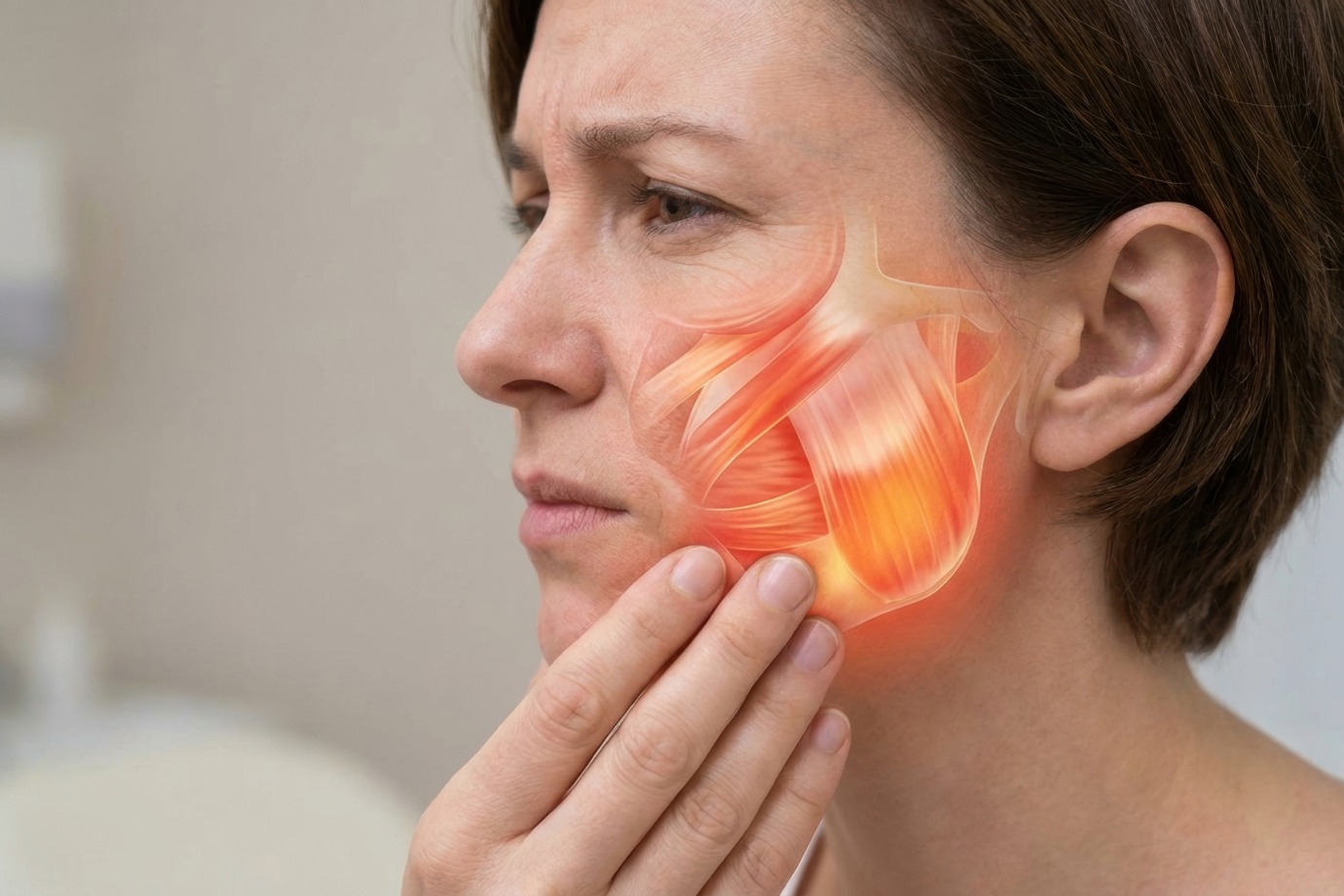
Ask a room of adults whether they grind their teeth and most will say no. Ask their partners, or their dentists, and the answer is often different. Jaw clenching and teeth grinding, known clinically as bruxism, frequently happens during sleep or deep concentration, which means the person doing it is the last to know. The signs are real, though, and many of them are easy to mistake for something else.
ROZE was created by Dr. David Roze, a biological dentist with 13+ years of clinical practice in Dubai. In a city with demanding working lives, long hours and high stress, he sees the effects of clenching and grinding in patients of every age. This article walks through the signs people most often miss, why they matter, and what a considered response looks like.
What bruxism actually is
Bruxism is the habitual clenching, grinding or bracing of the teeth and jaw outside of normal chewing. It comes in two broad forms. Sleep bruxism happens unconsciously at night, often in short bursts. Awake bruxism is more of a daytime habit: pressing the teeth together while reading emails, driving in traffic, or lifting weights.
Not every episode is harmful, and many people clench lightly from time to time without consequence. The concern arises when it is frequent and forceful enough to strain the teeth, the jaw joints and the surrounding muscles. Your bite can generate considerable pressure, far more than is needed to chew food, and teeth are not designed to carry that load for hours at a time.
The signs most people miss
Dramatic cracked teeth get noticed. The subtler indicators below are the ones that tend to be overlooked for years.
Waking with a tight jaw or a dull headache
A stiff jaw, tension around the temples or a morning headache that fades during the day is one of the classic patterns. People often blame stress, screens or poor sleep without connecting it to the jaw.
Flat, shortened or chipped teeth
Look at the biting edges of your front teeth in the mirror. If they look flatter or shorter than they used to, or if tiny chips have appeared, grinding may be wearing them down. Dentists also look for wear on the chewing surfaces of the back teeth, where cusps appear flattened.
Tooth sensitivity with no obvious cause
When the outer enamel thins or microscopic cracks develop, the layer beneath becomes more exposed. That can cause a sharp response to cold air, hot drinks or sweet foods. Many people searching for a sensitive toothpaste are actually dealing with a clenching habit that has been quietly wearing the enamel.
Notches near the gumline
Small wedge-shaped defects near the gum margin are sometimes linked to heavy biting forces flexing the tooth. They are not always caused by brushing too hard, as is commonly assumed.
Scalloped tongue edges or a ridge inside the cheek
If the sides of your tongue show rippled indentations, or you can see a white line along the inside of your cheek, it may indicate that you press the tongue or cheek against the teeth while clenching.
Clicking, popping or limited opening
The temporomandibular joints, which hinge your jaw, can become sore or noisy under repeated strain. Some people notice their mouth does not open as widely as before, or that chewing tires the face.
Ear pain or a feeling of fullness
Because the jaw joint sits close to the ear, discomfort there can feel like an ear problem. If an ear examination finds nothing, the jaw is worth considering.
A partner who hears grinding
Sometimes the clearest sign comes from the person sleeping next to you. A gritty, rhythmic sound at night is worth taking seriously, even if you feel fine in the morning.
Why it happens
There is rarely one cause. Stress and anxiety are strongly associated with clenching, and many people notice it intensifies during demanding periods. Other contributors include disrupted sleep, snoring or sleep-disordered breathing, caffeine and alcohol in the evening, certain medications, and an uneven bite. Some people clench simply out of habit during focused tasks.
Because the triggers are so varied, a dentist will usually look at the whole picture, not just the teeth. A biological approach to dentistry pays particular attention to sleep, breathing and lifestyle factors that may be driving the habit.
What happens if it goes unaddressed
Over months and years, ongoing grinding can lead to progressive enamel loss, increased sensitivity, cracked or fractured teeth, loosened restorations such as fillings and crowns, gum recession in some cases, and persistent jaw and muscle pain. The earlier it is spotted, the more options there are to protect what you have.
None of this is cause for alarm. It is a good reason to have the question looked at, because wear that has been caught early is far easier to manage than wear that has progressed.
What a sensible response looks like
Have it assessed
A dentist can examine wear patterns, check the jaw muscles and joints, and discuss whether the habit seems to be active. They can also rule out other explanations for your symptoms.
Consider a night guard
A custom-made occlusal splint does not stop the grinding, but it creates a protective barrier so that the forces fall on the guard rather than your enamel. Custom fitting matters. Over-the-counter versions vary in comfort and may not suit everyone, so ask your dentist what is appropriate for you.
Reduce the triggers you can control
- Wind down before bed and keep a regular sleep schedule.
- Limit caffeine and alcohol in the evening.
- Notice daytime clenching. A useful reminder is lips together, teeth apart, jaw relaxed.
- Try gentle jaw stretches and a warm compress on tight muscles.
- Avoid chewing gum and biting on pens or nails, which keep the muscles working.
- If snoring or tiredness is a concern, mention it to your doctor.
Look after the enamel you have
Enamel is mostly mineral, and it cannot regrow once it is lost, but its surface can be supported. Hydroxyapatite is the mineral that makes up the majority of enamel, and a hydroxyapatite toothpaste can help replenish the surface and fill microscopic irregularities. For clenchers with worn, sensitive teeth, this kind of remineralizing toothpaste is a gentle way to support comfort alongside professional care. It does not stop grinding or reverse significant wear, and it is not a substitute for a dentist’s guidance.
Technique and tools matter too. Worn enamel does not appreciate aggressive scrubbing, so a soft brush and light pressure are sensible. Our Natural Vanilla Toothpaste has a mild flavour that many people with sensitive teeth find comfortable, with 15% micro-hydroxyapatite and no fluoride, SLS, artificial colours or artificial sweeteners.
Frequently asked questions
How do I know if I grind my teeth at night?
Common clues include morning jaw tightness, headaches, worn or chipped teeth, and a partner who hears grinding. A dentist can confirm by examining the wear on your teeth and the condition of your jaw muscles.
Is teeth grinding only caused by stress?
No. Stress is a common factor, but sleep quality, breathing, medication, caffeine, alcohol and the way your teeth meet can all play a part. Often several contribute at once.
Can grinding cause sensitive teeth?
It can. As enamel wears or develops tiny cracks, the layer beneath becomes more exposed to temperature and sweetness. A gentle, enamel-supportive routine can help comfort, but the underlying habit should be assessed.
Will a night guard cure bruxism?
A night guard is a protective device, not a cure. It helps shield the teeth from damage while you and your dentist work on the causes.
Can hydroxyapatite toothpaste repair teeth worn by grinding?
Hydroxyapatite can help support the enamel surface and reduce sensitivity for many people, but it cannot rebuild substantial structure that has been lost. Significant wear needs professional assessment.
The takeaway
Jaw clenching and teeth grinding often go unnoticed until the signs are well established. A tight jaw on waking, flattened teeth, unexplained sensitivity and a scalloped tongue are all worth bringing up at your next appointment. Early awareness gives your dentist more ways to help, from a protective guard to lifestyle changes and sleep support.
For those exploring a fluoride-free option formulated by dentists to support enamel in the meantime, ROZE’s range offers one place to start.