

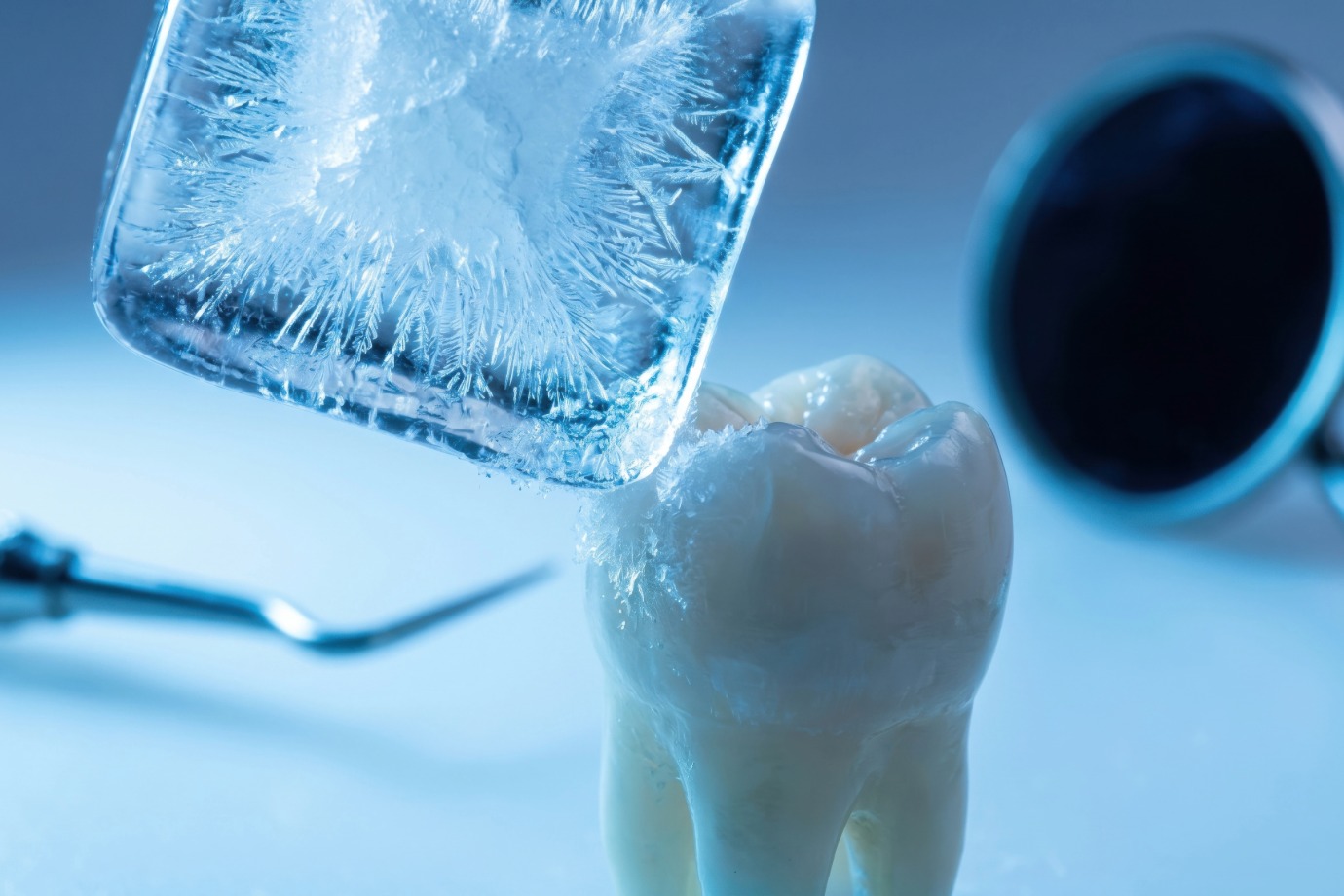
Here is something that surprises many people living in the Gulf: the months when teeth feel most sensitive are often not the hottest ones. As the weather turns, desert mornings grow crisp, evening winds pick up, and the air-conditioning that has run all summer still blasts in offices and malls. Add a winter habit of hot coffee followed by iced water, and sensitive teeth in cold weather become a very real, very local complaint.
That short, sharp twinge when cool air hits a tooth is easy to dismiss, but it is your teeth telling you something about the state of your enamel and gums. ROZE was created by Dr. David Roze, a biological dentist with 13+ years of clinical practice in Dubai, and this seasonal pattern is one he sees in patients every year. Understanding where the sensation comes from is the first step to calming it.
What is actually happening inside a sensitive tooth
A healthy tooth crown is wrapped in enamel, the hardest substance in the body. Beneath it lies dentine, a softer layer threaded with thousands of microscopic channels called dentinal tubules. Each tubule runs inwards towards the pulp, where the tooth’s nerve lives.
When enamel thins or gums recede, those tubules can become exposed. A sudden change in temperature makes the fluid inside them shift, and the nerve reads that movement as a sharp, brief pain. Cold is a particularly strong trigger because it causes the fluid to move quickly. That is why a breath of cool morning air or a sip of chilled water can produce a jolt that warm food does not.
So sensitivity is less about the weather itself and more about how much of the tooth’s protective outer layer remains in place. Cooler months simply give an exposed tooth more chances to react.
Why sensitive teeth in cold weather flare up
Rapid temperature swings
Teeth expand and contract very slightly with temperature. Repeatedly moving between a hot drink and cold air, or from a heated car into a chilly evening, places a little stress on enamel and can make existing exposure more noticeable.
Breathing through the mouth
Cold, dry air and seasonal congestion often push people into mouth breathing, particularly outdoors or during exercise. Air passing directly over the front teeth cools them quickly and dries the mouth, reducing the protective effect of saliva.
Seasonal colds and dehydration
Colds and sinus congestion can cause pressure that feels like tooth pain, especially in the upper back teeth near the sinuses. At the same time, people tend to drink less water in cooler weather, and a drier mouth leaves enamel less well protected.
Comfort habits
Cooler months bring more hot drinks, more citrus as people try to ward off colds, and sometimes more clenching or grinding with stress. Acidic foods can soften enamel temporarily, and grinding wears it over time.
The underlying causes worth checking
Weather reveals sensitivity, but the root cause usually sits elsewhere. Common contributors include:
- Enamel wear from acidic food and drink, or from brushing too hard with a firm brush.
- Gum recession, which exposes root surfaces that never had enamel to begin with.
- Grinding or clenching, often at night, which can wear and flex teeth.
- Abrasive toothpastes, including some whitening formulas, that polish away surface layers over time.
- Recent dental work such as whitening or a new filling, which can cause temporary sensitivity.
- Decay or a cracked tooth, which need professional attention rather than a home remedy.
A useful rule: generalised, brief sensitivity across several teeth usually points to enamel wear or recession. Sharp pain in a single tooth, pain on biting, or a lingering ache after the cold has gone deserve a dental examination.
Calming sensitivity: a practical approach
Brush gently and wisely
Choose a soft or ultra-soft brush and hold it lightly, at a slight angle towards the gumline, using small circles rather than a vigorous scrub. Many people are surprised by how much sensitivity eases once they simply stop brushing so hard.
Wait after acidic food or drink
After citrus, fizzy drinks or wine, rinse with water and wait around 30 to 60 minutes before brushing. This gives softened enamel time to reharden with the help of saliva.
Protect your mouth from the cold
On cold, windy mornings or during outdoor exercise, try to breathe through your nose. Sip drinks at moderate temperatures where you can, and avoid alternating very hot and very cold in quick succession.
Stay hydrated
Saliva is your teeth’s natural defence, carrying minerals that help repair early wear. Drinking water steadily through the day supports it, particularly in air-conditioned rooms.
Consider a night guard if you grind
If you wake with jaw tension or your partner hears grinding, your dentist can fit a custom guard that protects enamel overnight.
Why the right sensitive toothpaste matters
Since sensitivity comes from open tubules, the most logical answer is to close them and strengthen the surface over them. This is where the choice of toothpaste becomes central.
Some sensitivity toothpastes work mainly by calming the nerve’s response, which can help with comfort but does not address the exposed surface itself. A remineralising toothpaste based on hydroxyapatite takes a different route. Hydroxyapatite is the same mineral that forms most of your enamel and dentine, and it can help deposit into and seal open dentinal tubules while supporting the enamel surface around them. In other words, it works with the tooth’s own structure rather than masking the signal.
This is also the angle from which ROZE approaches fluoride. Fluoride is a synthetic additive that acts mainly at the tooth surface, while hydroxyapatite is the material the tooth is built from, offering the more natural way to rebuild and protect from within. For a sensitive mouth, a fluoride-free toothpaste with clinical-grade hydroxyapatite is the more considered choice: it targets the very tubules that cause the twinge, using a mineral the body already recognises.
What to look for on the label
- Hydroxyapatite listed as an active mineral, ideally at a meaningful concentration.
- Low abrasion: avoid gritty whitening pastes while teeth are sensitive.
- No SLS: this foaming agent can irritate delicate gum tissue around exposed roots.
- Gentle flavouring: very strong, harsh mint can make sensitive mouths feel worse.
The ROZE Natural Vanilla Toothpaste was formulated along these lines, with 15% micro-hydroxyapatite, an alkaline pH and no SLS, and its mild flavour suits those who find strong mint uncomfortable. As with any remineralising approach, consistency matters more than intensity: twice daily, every day, over several weeks.
When to see your dentist
Home care can help a great deal, but some signs call for a professional look:
- Pain that lingers for more than a few seconds after the trigger has gone.
- Sensitivity concentrated in one tooth, or pain when biting down.
- Visible gum recession, notches near the gumline, or a chipped tooth.
- Sensitivity that has not improved after several weeks of gentler care.
Your dentist can rule out decay or cracks and, where needed, offer in-chair treatments to protect exposed areas.
Frequently asked questions
Why do my teeth hurt when I breathe in cold air?
Cold air cools the tooth surface quickly, causing fluid in exposed dentinal tubules to move. The nerve interprets this as a sharp pain. It usually indicates some enamel wear or gum recession that is leaving dentine exposed.
Can sinus problems make my teeth feel sensitive?
Yes. The roots of the upper back teeth sit close to the sinuses, so congestion can create pressure that feels like toothache. If the discomfort fades as the cold clears, sinuses were the likely cause. If not, see your dentist.
Does hydroxyapatite help with sensitive teeth?
Hydroxyapatite is widely used for sensitivity because it can help occlude open dentinal tubules and support remineralisation of the enamel surface. Many people notice a difference within a few weeks of consistent use, although results vary.
How long does it take for sensitivity to improve?
With gentler brushing and a remineralising toothpaste, many people find their sensitivity eases over two to six weeks. Persistent or worsening pain should always be checked by a dentist.
Is cold-weather sensitivity a sign of something serious?
Often it reflects mild, manageable wear. However, it can also signal decay, a crack or advancing gum recession, so it is wise to mention it at your next check-up rather than simply living with it.
A calmer season for your teeth
Cooler weather does not create sensitivity, it uncovers it. The twinge is a useful early message that enamel or gums need attention, and in most cases the response is straightforward: gentler brushing, sensible habits around acidic and very cold drinks, good hydration, and a toothpaste that helps seal and strengthen the exposed surface.
Listen to that signal early and involve your dentist when something feels wrong. For anyone exploring a dentist-formulated, fluoride-free approach to sensitive teeth, ROZE’s range of hydroxyapatite toothpastes offers one gentle place to begin.