

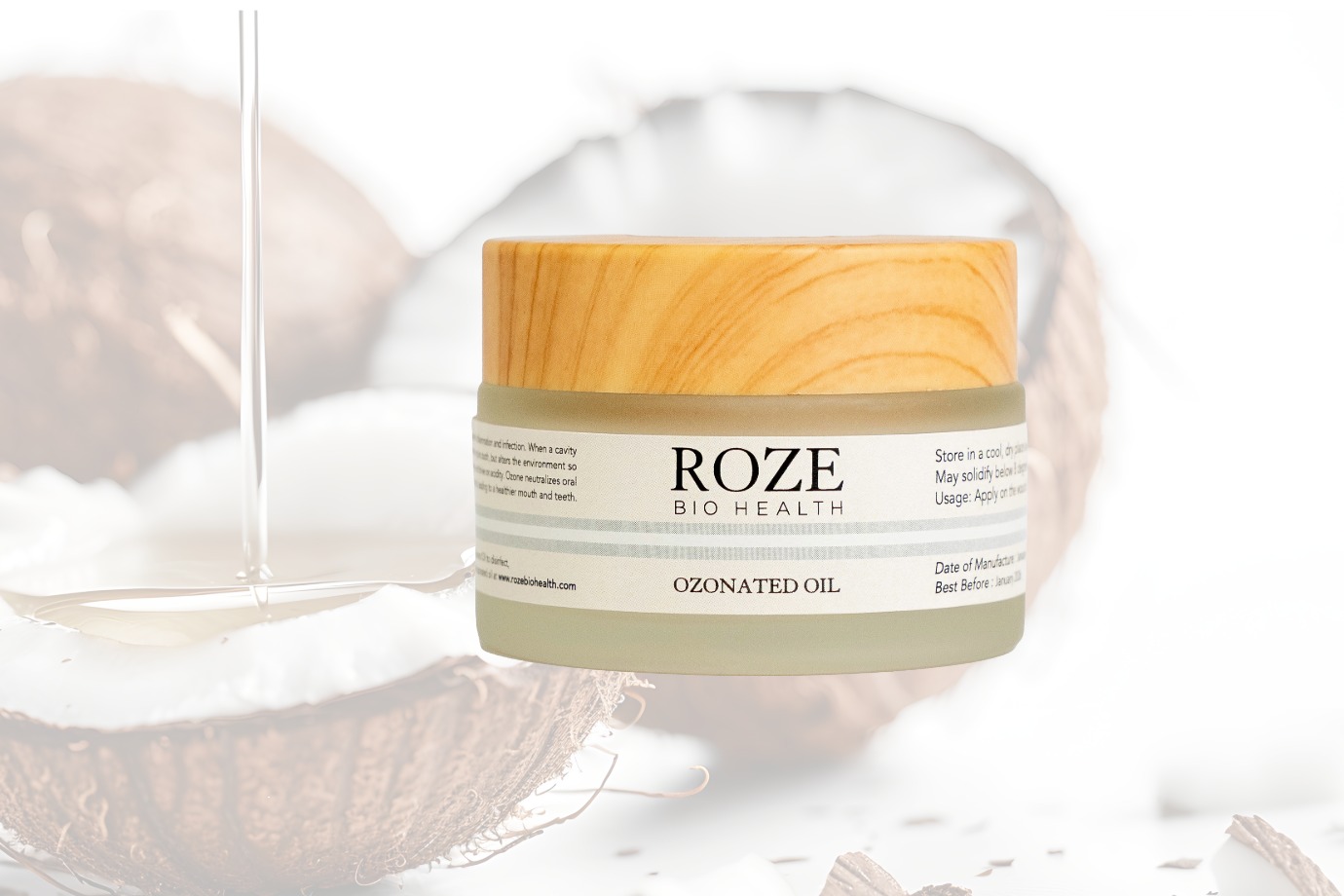
You may have seen a small glass jar of golden, slightly thick oil on a biological dentist’s counter and wondered what it is doing there. It is ozonated oil, and interest in it has grown steadily among practitioners who take a whole-mouth, whole-body view of oral care. This guide explains what ozonated oil is, how it is made, where it is used in dentistry, and what a sensible reader should and should not expect from it.
The perspective here comes from the clinical experience behind ROZE BioHealth, created by Dr. David Roze, a biological dentist with 13+ years of clinical practice in Dubai. In that time, patients have asked about ozonated oil more often than almost any other “natural” topic, usually with a mix of curiosity and understandable caution.
What is ozonated oil?
Ozonated oil is a plant oil, most commonly olive, sunflower or sesame, that has been infused with ozone gas over an extended period. Ozone is a molecule made of three oxygen atoms. When it is bubbled through the oil, it reacts with the unsaturated fats and forms stable compounds, which is why the oil turns from liquid to a thick, gel-like consistency over time.
Once the reaction is complete, the oil no longer contains free ozone gas in the way a gas-based treatment would. What remains is a stable, oxygen-rich oil that can be stored and applied. Quality varies a great deal between producers, so the source oil, the duration of ozonation and the storage conditions all matter.
Why biological dentists are paying attention
Biological dentistry looks at the mouth as part of the wider body and tends to favour gentle, minimally invasive approaches wherever possible. Ozone-based products fit that outlook because they are used to support the mouth’s own balance rather than to strip or sterilise it.
Practitioners who use ozonated oil generally describe a few reasons for their interest:
- It is a plant-based carrier, familiar to patients who prefer natural ingredients.
- It is used as a topical adjunct, alongside professional care, not instead of it.
- Many people find it comfortable to apply to the gums and soft tissues.
- It sits well within a routine focused on the oral microbiome.
How ozonated oil is used in oral care
In a clinical setting, ozonated oil may be applied to the gums or used as part of a broader hygiene protocol. At home, people most often use it in a few simple ways.
Oil pulling
A small amount is swished gently in the mouth, then spat out and the mouth rinsed with water. This is an old practice, and ozonated oil is a newer variation of it. It should never be swallowed in quantity, and it does not replace brushing.
Gum massage
A tiny amount can be massaged onto the gum line with a clean fingertip after brushing. Some people find this soothing, particularly when their gums feel tender or dry.
Spot application
Some people dab a little onto a minor irritation in the soft tissues, such as a small ulcer. Anything that does not settle within a couple of weeks deserves a dentist’s attention.
What it can and cannot do
This is the part that matters most for an honest article. Ozonated oil is a supportive product. It may help maintain a comfortable, balanced environment for the gums, and many people enjoy using it, but it does not cure gum disease, reverse cavities or replace professional cleaning.
Cavities and gum inflammation are caused by plaque biofilm and the way it interacts with the teeth and tissues over time. The foundation of prevention remains the same: thorough mechanical cleaning, a diet low in frequent sugar, regular dental visits and a toothpaste that supports enamel. Ozonated oil, at best, sits on top of those foundations.
Be a little sceptical of any claim that a single oil will transform your oral health. The evidence base around ozone in dentistry is still developing, and a careful clinician will describe it as promising in some uses and unproven in others.
Who should be cautious
Ozonated oil is not right for everyone. Speak to your dentist or doctor first if any of the following apply:
- You are pregnant or breastfeeding.
- You have allergies to olive, sesame or other plant oils.
- You have persistent gum bleeding, swelling or loose teeth, which need a proper examination.
- You are giving something to a young child, who may swallow more than intended.
Also stop using any new product if it causes burning, a rash or lasting irritation.
How to choose a good ozonated oil
Because the category is unregulated in many places, it helps to read labels with a critical eye.
- Base oil: look for a named, food-grade oil such as organic olive oil.
- Purity: a short ingredient list is a good sign, with no added fragrance, colour or flavouring.
- Consistency: real ozonated oil is noticeably thick. A thin, runny product may have been only lightly treated.
- Storage: it is usually kept cool, often in a refrigerator, and in a dark or opaque container.
- Transparency: a reputable maker will tell you how the oil is produced.
Where daily fundamentals fit in
Whatever you add to your routine, the daily basics do the heavy lifting. Brush twice a day for two minutes with a soft or nano-bristle brush, clean between the teeth, and choose a toothpaste that suits your enamel. Enamel is made largely of hydroxyapatite, and a hydroxyapatite toothpaste can help support remineralisation in a way that fits neatly beside a gentle, biological approach.
For those exploring a fluoride-free option formulated by dentists, ROZE’s Natural Fresh Mint Toothpaste is one place to start. It contains 15% clinical-grade micro-hydroxyapatite and is free from SLS, parabens and artificial sweeteners.
A practical way to try it
If you decide to explore ozonated oil, introduce it slowly. Begin with a very small amount, a quarter of a teaspoon at most, and use it on its own for a week so that you can tell how your mouth responds. Adding several new products at once makes it impossible to know which one is helping or irritating.
Keep a simple note of how your gums feel, and mention the oil at your next dental check-up. A dentist who knows what you are using can interpret changes more accurately, and can tell you if something needs a closer look. Many people find that the ritual itself, a few calm minutes with no screen, is part of the appeal.
Finally, remember that gum tissue responds most reliably to consistent basics. Cleaning between the teeth daily, brushing gently along the gum line and keeping sugary snacks to mealtimes will always outperform an occasional extra, however elegant it feels.
Frequently asked questions
Is ozonated oil the same as ozone therapy?
No. Ozone therapy usually refers to the direct use of ozone gas in a controlled clinical setting. Ozonated oil is a plant oil in which ozone has already reacted with the fats, giving a stable product that can be applied topically.
Can ozonated oil replace toothpaste?
No. It does not clean plaque from the teeth, and it does not supply minerals to enamel. Think of it as an occasional extra, not a substitute for brushing.
How often can I use it?
Many people use it once a day at most, in very small amounts. Follow the instructions of the product and your dentist’s advice, particularly if you have any existing gum concerns.
Does it taste unpleasant?
Most people notice a mild, slightly earthy or sharp taste that they either get used to or dislike. Some products are lightly flavoured with natural essential oils, so check the label if you are sensitive.
Is it safe for children?
Because children may swallow oil during use, it is best to ask your paediatric dentist before introducing it.
The expert takeaway
Ozonated oil is an interesting, gentle addition for some people, and it explains why biological dentists have been talking about it. It is best seen as a supporting ritual, never a treatment. Keep your foundations strong, choose clean ingredients, look after your enamel, and see your dentist regularly. If a product promises more than that, it is worth asking why.