

Activated charcoal powder and at-home peroxide strips have both had their moment on social media, each promising a dramatically brighter smile within days. The appeal of charcoal and peroxide whitening is obvious. What is less visible is what these methods are doing to the enamel underneath while they work.
Dr David Roze, the biological dentist behind ROZE BioHealth who has practised in Dubai for more than thirteen years, sees a steady stream of patients drawn in by whitening trends who arrive months later with sensitivity, sore gums, or enamel that looks thinner than before. Whitening is one of the areas of dentistry where the fastest-looking result is often the one worth being most cautious about.
Why charcoal and peroxide whitening trends are so appealing
Both methods promise something conventional whitening toothpaste rarely delivers: a visible shade change within days rather than weeks. Charcoal feels natural and low-tech. Peroxide strips feel clinical and fast. Neither claim is entirely false, but both come with trade-offs that rarely make it into the marketing.
What charcoal powder is actually doing to your teeth
Activated charcoal whitens by abrasion. Its gritty texture physically scrubs surface stain off the tooth, and because it works this way rather than by breaking stain down chemically, the whitening effect is really a form of controlled scratching. Used occasionally this may seem harmless, but with regular use the same abrasiveness gradually wears down the enamel layer itself. Over months, that thinning enamel can let more of the naturally yellow dentine underneath show through, which means a habit adopted to look whiter can eventually leave teeth looking more yellow, not less.
What peroxide-based whitening does
Hydrogen and carbamide peroxide work differently: they penetrate the enamel and chemically break down the molecules responsible for staining. This can genuinely lighten the visible shade of a tooth, which is why dentists use peroxide-based whitening under supervision. The concern with at-home strips and gels is less about the chemistry and more about control. Concentration, contact time and frequency are all harder to manage without professional guidance, and overuse commonly leads to enamel dehydration, temporary but sometimes intense sensitivity, and irritation where gel contacts the gums.
Charcoal and peroxide whitening compared with a mineral-based approach
Placed side by side, the three most common approaches to a brighter smile work in quite different ways:
| Approach | How it works | Effect on enamel with regular use |
|---|---|---|
| Activated charcoal powder | Physically scrubs surface stain away through abrasion | Gradually wears down enamel, which can expose more yellow dentine over time |
| Peroxide strips and gels | Chemically breaks down stain molecules within the tooth | Can dehydrate enamel and irritate gums, often causing sensitivity |
| Hydroxyapatite toothpaste | Mineral particles fill microscopic surface imperfections that scatter light unevenly | Supports and rebuilds the enamel surface rather than wearing or bleaching it |
What the science actually recommends instead
A Hydroxyapatite Toothpaste takes a fundamentally different route to a brighter smile. Rather than scrubbing the surface away or bleaching it chemically, hydroxyapatite particles fill in the microscopic pits and imperfections on the tooth surface that otherwise scatter light unevenly and make teeth look duller. Smoothing that surface allows light to reflect more evenly, which is what a visibly whiter smile actually looks like, achieved by rebuilding rather than removing.
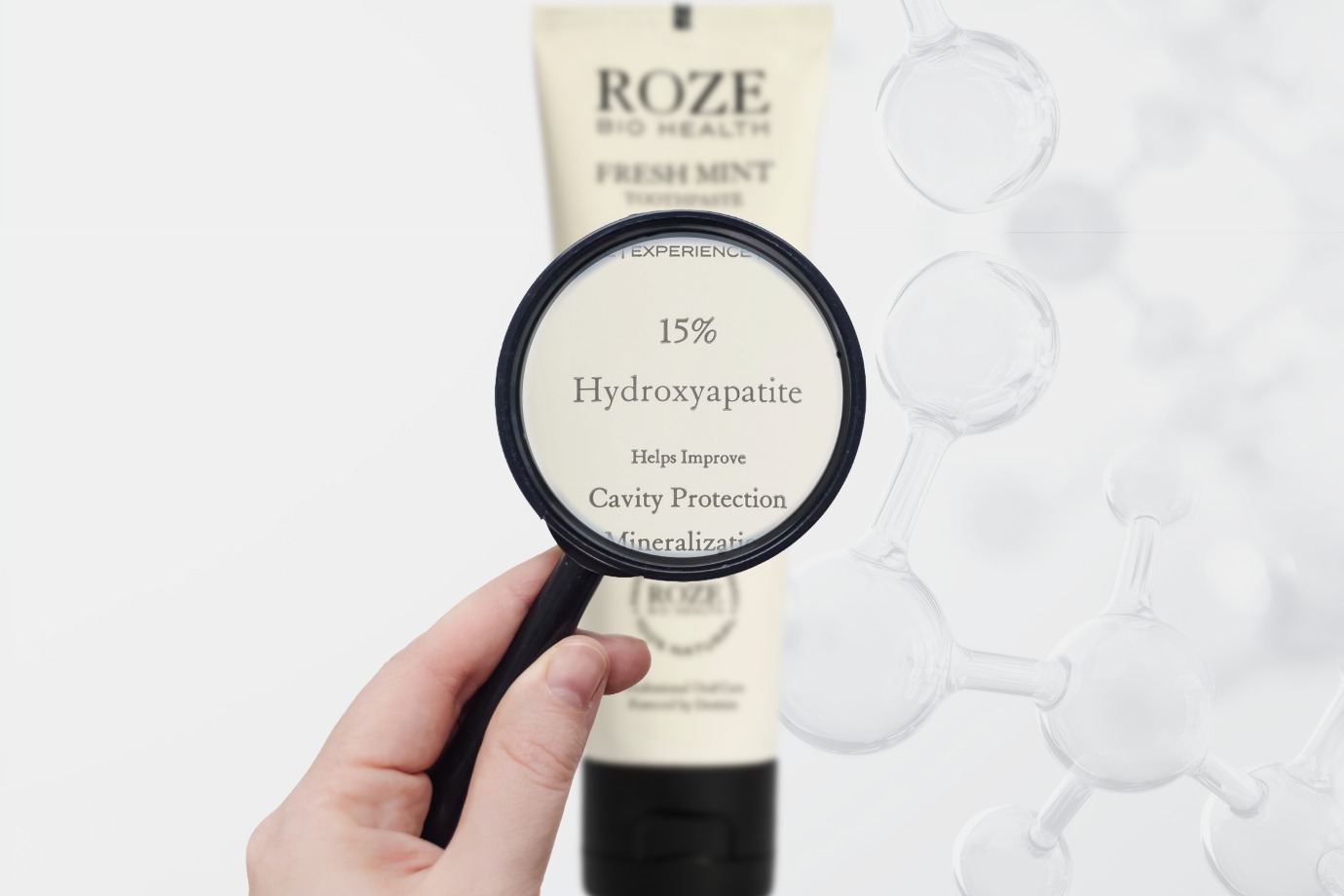
Fluoride works from a similar logic to charcoal and peroxide in one respect: it sits on the tooth surface rather than becoming part of it. Hydroxyapatite, by contrast, is the mineral enamel is already made of, so it can be absorbed into the tooth’s own structure and rebuild from within. For anyone specifically trying to protect enamel while whitening, that distinction between coating the surface and rebuilding it matters more than usual. A Best Hydroxyapatite Toothpaste formulated at a clinically meaningful concentration, such as ROZE’s fifteen per cent Natural Fresh Mint Toothpaste, is designed with exactly this gradual, enamel-safe approach in mind.
Why enamel deserves this much caution
Part of what makes aggressive whitening worth approaching carefully is that enamel, unlike skin or gum tissue, cannot repair itself once it is gone. There are no living cells inside mature enamel to regrow it, so any wearing down from repeated abrasion is permanent. A whitening habit that trades long-term enamel thickness for a faster result in the short term is rarely a fair exchange, particularly when a gentler method can reach a similar outcome with patience instead of risk. This is worth remembering especially for teenagers and young adults picking up whitening habits early, since decades of daily brushing still lie ahead of them.
Sensitivity is often the first warning sign that a whitening method is asking too much of the enamel. A tooth that suddenly reacts to cold water or sweet food is not something to push through for the sake of finishing a course of strips or a tub of charcoal powder. It is the tooth signalling that its protective layer has been disturbed, and continuing to use the same method through that signal tends to make the underlying problem worse rather than simply uncomfortable.
How to whiten more safely at home
- Favour gradual, mineral-based whitening over aggressive one-off treatments for everyday maintenance.
- Avoid daily charcoal use. If used at all, keep it to an occasional treatment rather than a routine habit.
- Follow product instructions exactly for any peroxide gel or strip, and never extend contact time hoping for faster results.
- Consider professional whitening for a dramatic shade change, since a dentist can control concentration and protect the gums directly.
- Stop and reassess if sensitivity appears. It is a sign the enamel or gums need a break, not a signal to push through.
- Keep a remineralising toothpaste as part of the daily routine, whichever whitening method is used, so the enamel has ongoing mineral support.
Frequently asked questions
Is charcoal toothpaste bad for your teeth?
Used occasionally it is unlikely to cause harm, but regular use of an abrasive charcoal product can gradually wear down enamel, which may leave teeth looking more yellow rather than whiter over time.
Does peroxide whitening damage enamel permanently?
Used as directed, especially under professional guidance, peroxide whitening does not typically cause permanent damage, though it can cause temporary sensitivity. Overuse or ill-fitting at-home products carry a higher risk of gum irritation and prolonged sensitivity.
Can hydroxyapatite toothpaste whiten teeth on its own?
It can support a visibly brighter, smoother-looking smile by filling surface imperfections and supporting enamel remineralisation, though it works gradually rather than delivering the fast shade change of professional bleaching.
How long does it take to see results from a mineral-based whitening toothpaste?
Many people notice a smoother, brighter appearance over several weeks of consistent use, since the process works by gradually rebuilding the enamel surface rather than stripping or bleaching it.
The takeaway
Charcoal and peroxide whitening can both change the shade of a tooth, but neither does so without a cost to the enamel underneath when used aggressively or too often. Understanding how each method actually works, abrasion, chemical bleaching, or mineral rebuilding, makes it far easier to choose an approach that still looks good in ten years, not just ten days. For readers wanting to build a gentler, enamel-safe whitening routine, ROZE’s Dental Bundles offer one place to start. Anyone with existing sensitivity or visible enamel wear should speak to a dentist before beginning any whitening routine.