

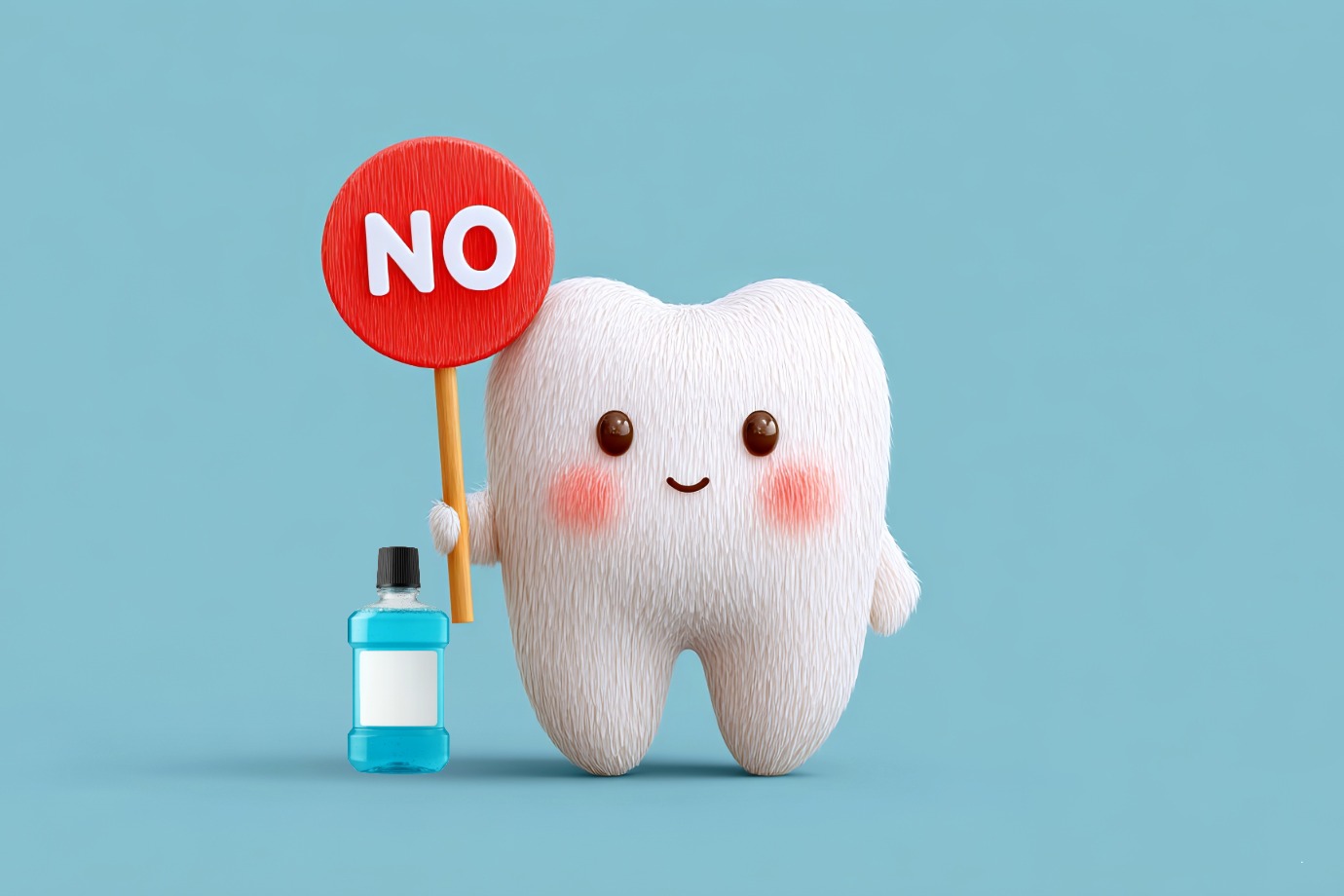
Someone who brushes twice a day, carries mints, and rinses with mouthwash after every meal should not still be worrying about their breath. Yet it is one of the most common quiet frustrations dentists hear about: a patient doing everything “right” by conventional standards, and still not trusting their own breath in a conversation. Understanding the real causes of bad breath usually explains why.
Dr David Roze, the biological dentist behind ROZE BioHealth with more than thirteen years of clinical practice in Dubai, sees this gap constantly. Mouthwash can mask the smell for a few minutes. It rarely touches what is actually producing it.
Bad breath is a symptom, not a smell to mask
Persistent bad breath, known clinically as halitosis, is almost always a sign that something in the mouth or body is producing sulphur compounds continuously, not a hygiene failure that a stronger rinse can fix. Mouthwash can neutralise odour for a short window, but if the underlying source keeps producing it, the smell simply returns once the mint or menthol wears off, often within an hour or two.
The real causes behind persistent bad breath
- The back of the tongue. The rough, textured surface of the tongue, especially towards the back, traps bacteria and food debris that produce the majority of everyday bad breath. Brushing the teeth alone leaves this largely untouched.
- Dry mouth. Saliva constantly washes away bacteria and food particles. Anything that reduces saliva flow, dehydration, mouth breathing, certain medications, or sleeping with the mouth open, allows odour-producing bacteria to build up.
- Gum inflammation. Early gum disease, which can be present with no pain at all, produces its own persistent odour as bacteria colonise below the gumline.
- Diet. Garlic and onion are the obvious culprits, but low-carbohydrate and high-protein diets can also produce a distinct breath odour as the body shifts into ketosis.
- Sinus and postnasal drip. Mucus draining down the back of the throat, common with allergies or sinus congestion, feeds the same bacteria responsible for tongue-related odour.
- Coffee. Beyond its own smell, coffee reduces saliva flow and leaves the mouth more acidic, both of which favour odour-producing bacteria.
Why mouthwash often cannot fix any of this
Many everyday mouthwashes rely on alcohol to feel “clean” and antiseptic. Alcohol is effective at killing bacteria in the moment, but it also dries out the mouth, and a drier mouth is exactly the environment odour-producing bacteria prefer. Some formulations also contain sodium lauryl sulphate, the same harsh foaming agent found in many toothpastes, which can further disrupt the delicate balance of the oral microbiome rather than support it. The result is a cycle: rinse, feel fresh briefly, dry out, and the underlying bacteria repopulate faster than before.
A gentler, alkaline-balanced approach tends to serve the mouth’s natural microbiome far better than repeated antiseptic rinsing. It is part of why a well-formulated Natural Toothpaste leaves out sodium lauryl sulphate and fluoride, aiming to support the mouth’s own bacterial balance rather than strip it.
What actually helps, beyond a stronger mint
- Clean the tongue daily, ideally with a dedicated tongue scraper rather than a toothbrush alone, focusing on the back third where most odour originates.
- Stay hydrated throughout the day, not only at meals, since saliva is the mouth’s own natural rinse.
- Chew sugar-free gum or crunchy vegetables between meals to stimulate saliva flow when a proper brush is not possible.
- Treat gum health as a priority, not an afterthought, with regular flossing or interdental brushes to disrupt bacteria below the gumline.
- Choose an alkaline, Fluoride-free Toothpaste that supports the natural balance of the mouth rather than one built around harsh foaming agents.
- See a dentist if the odour persists despite good habits, since it may point to gum disease that needs treatment rather than masking.
Why morning breath happens to almost everyone
Even people with excellent oral hygiene wake up with noticeably worse breath than they had the night before, and it has nothing to do with how well they brushed. Saliva flow slows dramatically during sleep, and without it constantly washing the mouth, bacteria on the tongue and between the teeth are left undisturbed for hours, quietly producing sulphur compounds the whole time. Sleeping with the mouth open, common for anyone with mild congestion or a tendency to snore, makes this considerably worse by drying the mouth further. This is a normal, temporary state rather than a sign that something is wrong, and it usually resolves within an hour of eating, drinking water and brushing.
How the mouth’s microbiome shapes breath over the longer term
The mouth hosts a large and mostly beneficial population of bacteria, and a healthy balance among them is part of what keeps breath fresh day to day. Odour becomes a problem when certain anaerobic species, the kind that thrive in low-oxygen pockets such as the back of the tongue or below the gumline, are allowed to dominate. Repeated use of strong antiseptic mouthwash does not distinguish between helpful and odour-producing bacteria; it reduces both, and the odour-producing varieties are often quicker to repopulate afterwards. Supporting a balanced oral microbiome through gentler daily care, rather than repeatedly disrupting it with harsh rinses, tends to serve fresh breath better over months rather than minutes.
When it is worth looking beyond the mouth
In a small number of cases, persistent bad breath that does not respond to better oral care can be linked to the sinuses, the tonsils, or occasionally digestive issues. It is not something to self-diagnose from an article, but it is worth mentioning to a dentist or doctor if tongue cleaning, hydration and good gum care genuinely have not moved things after a few weeks.
Frequently asked questions
Why does my breath still smell after using mouthwash?
Most mouthwash addresses odour temporarily rather than the bacteria or dryness producing it. If the underlying cause, such as tongue bacteria or dry mouth, is not addressed, the smell tends to return once the effect wears off.
Does tongue scraping really make a difference?
Yes, for many people it makes a bigger difference than mouthwash. The back of the tongue harbours a large share of the bacteria responsible for everyday bad breath, and a scraper reaches it more effectively than a toothbrush.
Can a certain toothpaste help with bad breath?
A toothpaste formulated to support the mouth’s natural pH and microbiome, rather than strip it with harsh detergents, can help maintain a healthier bacterial balance over time, which supports fresher breath as a result rather than masking odour directly.
Is bad breath always a sign of poor hygiene?
No. Many people with good brushing and flossing habits still experience it because of dry mouth, diet, sinus drainage or early gum inflammation, none of which a toothbrush alone fully addresses.
The takeaway
Bad breath is rarely solved by a stronger rinse. It responds far better to understanding where the odour is actually coming from, the back of the tongue, a dry mouth, or gum health, and building daily habits that address that source directly. For a gentler, alkaline-friendly option to support that routine, ROZE’s Natural Vanilla Toothpaste is one option worth considering, with the family-friendly Watermelon Toothpaste a popular choice for children learning the same habits. Anyone whose bad breath persists despite these changes should still raise it with their dentist.