

A tube of toothpaste rarely comes with a good story attached, yet the one behind hydroxyapatite is genuinely worth telling. Long before it sat on bathroom shelves in Dubai, Tokyo or London, the mineral at the centre of this toothpaste was being studied for reasons that had nothing to do with brushing your teeth at all.
Dr. David Roze, the biological dentist who founded ROZE BioHealth after more than thirteen years of clinical practice in Dubai, has always been drawn to the history behind the ingredients he recommends. It is one reason he chose Hydroxyapatite Toothpaste as the foundation of his own formula rather than the fluoride most of us grew up with. Understanding where this mineral came from helps explain why it has earned such quiet trust over the decades since.
A mineral first studied far from the dentist’s chair
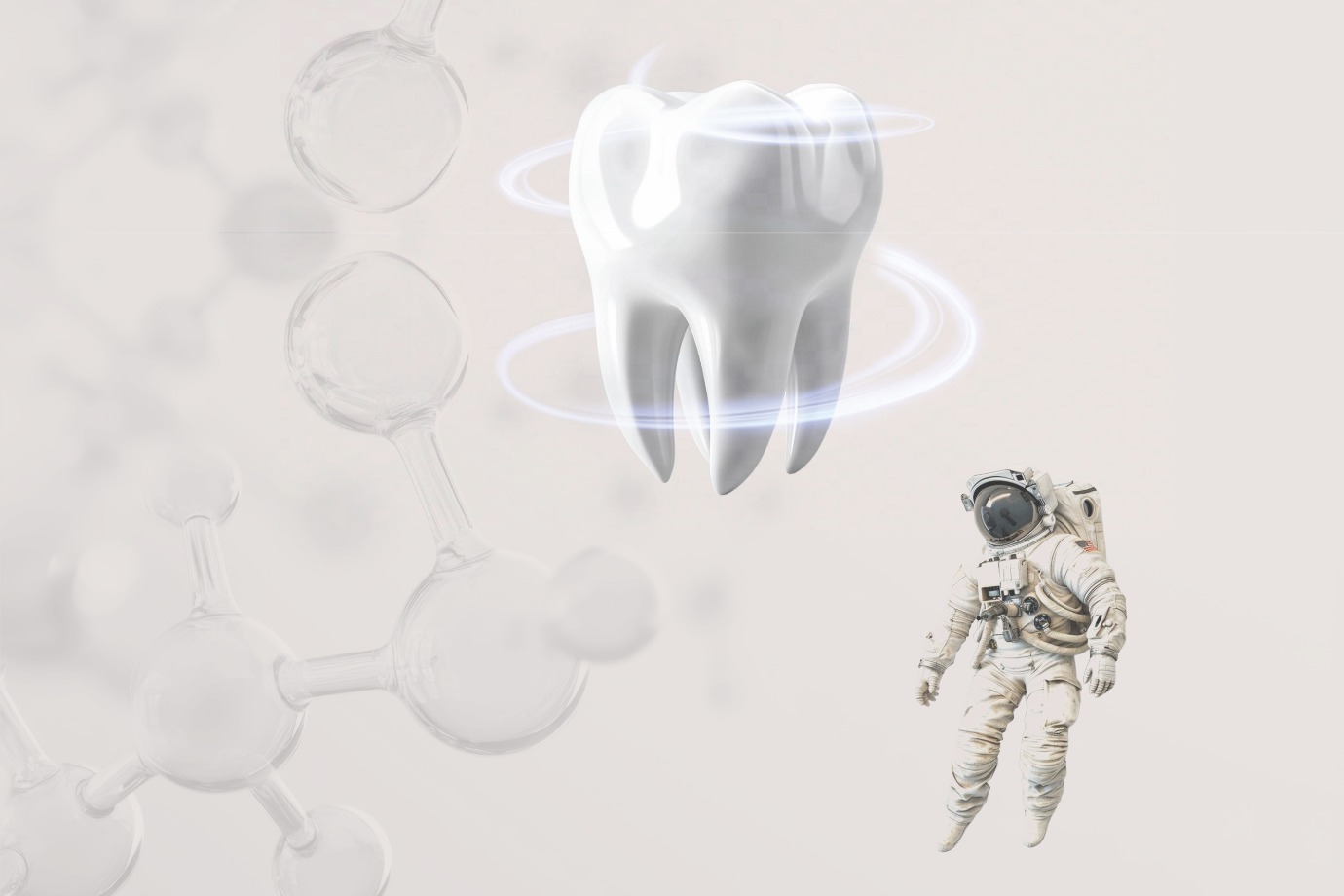
The commonly told version of this story traces back to research in the 1970s, when scientists in Japan were investigating synthetic bone and tooth materials as part of work connected to the country’s space programme. The concern at the time was how astronauts’ bones and teeth might be affected by extended periods away from Earth’s gravity, and researchers were looking for biocompatible materials that could closely mimic human hard tissue.
That research pointed towards hydroxyapatite, the mineral that already makes up the majority of natural bone and tooth enamel. It is worth being honest that the exact origin story has become part scientific record and part industry folklore over the years, repeated so often in oral care circles that some details have blurred with each retelling. What is well documented is that Japanese researchers went on to study hydroxyapatite specifically for dental use once its potential became clear, and that work laid the foundation for everything that followed.
From laboratory curiosity to everyday oral care
By the late 1970s and into the 1980s, hydroxyapatite had moved from aerospace-adjacent research into Japanese toothpaste formulas, where it has remained in continuous, mainstream use for more than forty years. That is a genuinely long track record for an oral care ingredient, and it is part of why biological dentists like Dr. Roze feel comfortable recommending it today.
The appeal is straightforward once you understand the chemistry. Enamel is roughly ninety seven percent mineral, and that mineral is hydroxyapatite. A toothpaste built around the same substance the tooth is already made of is, in a sense, simply giving the tooth more of its own material to work with, rather than introducing something foreign to achieve a similar protective effect. That is also why so many dentists describe it as biomimetic, meaning it works with the body’s own chemistry rather than against it.
Why this history matters more than it might seem
It would be easy to treat this as a piece of trivia, interesting but beside the point. In practice, the history matters because it explains why hydroxyapatite is not a recent wellness trend dressed up in scientific language. It has been quietly used, studied and refined for decades, first out of scientific curiosity and later because it worked.
Fluoride, by comparison, became the dominant ingredient in Western toothpaste around the same period for different reasons, largely tied to public health campaigns against tooth decay. It is a synthetic additive that sits on the surface of the tooth, and a trace of it is swallowed with every brush regardless of how carefully you spit. Hydroxyapatite works differently: because it is the same food-grade mineral the tooth already contains, many people prefer the logic of rebuilding enamel from within rather than relying on a surface coating made from something the body was never designed to ingest.
What hydroxyapatite actually does for your teeth
Once you understand where it came from, the practical benefits make more sense. Hydroxyapatite is generally understood to support the remineralisation of enamel that has become thin or softened, helping to reinforce the tooth’s natural mineral structure. It is also thought to help occlude the microscopic tubules in dentine that are associated with sensitivity, which is why many people notice less discomfort with hot, cold or sweet foods after switching to a Micro hydroxyapatite Toothpaste formula.
There is also a cosmetic benefit worth mentioning. Because the mineral can fill in microscopic surface imperfections, teeth often appear visibly smoother and whiter with consistent use, not through bleaching or abrasion but through genuine surface repair. None of this amounts to a guarantee, since individual results vary, but it is a reasonable expectation based on how the mineral behaves.
Why the Gulf is catching up quickly
Hydroxyapatite has taken decades to move from a niche Japanese ingredient to a mainstream global one, and the Gulf region is a relatively recent chapter in that story. ROZE was created specifically to bring a clinically formulated Hydroxyapatite Toothpaste Dubai residents could buy locally, developed by a dentist who spent over a decade treating patients in the city before formulating his own line rather than importing an existing one.
That local grounding matters for a product that depends on genuine clinical understanding rather than simply repackaging an imported trend. A Hydroxyapatite Toothpaste UAE readers can trust is one formulated with an awareness of the dental concerns local dentists see most often, from a hot climate and high consumption of soft drinks and citrus to the sensitivity that can come with them.
Choosing a hydroxyapatite toothpaste today
Not every hydroxyapatite toothpaste on the market is formulated the same way. Concentration matters, and so does particle size. ROZE’s Natural Fresh Mint Toothpaste uses a fifteen percent micro-hydroxyapatite formula, among the highest concentrations available in a consumer toothpaste, alongside an alkaline pH designed to support rather than disrupt the natural balance of the mouth. It also leaves out fluoride, SLS, parabens and artificial colours, each replaced with a gentler alternative.
For anyone drawn to the science and the history in equal measure, it is worth checking the concentration and ingredient list of any hydroxyapatite toothpaste before assuming they are all formulated to the same standard.
Frequently asked questions
Is the space research origin story actually true?
The link between early hydroxyapatite research and space-related biomaterial studies in Japan is widely repeated within the oral care industry, though the precise details have blurred somewhat with decades of retelling. What is well established is that Japanese researchers began studying hydroxyapatite for dental applications in the 1970s and that it has remained in continuous use in Japanese oral care ever since.
Is hydroxyapatite natural?
Yes. It is the same mineral that makes up the majority of natural bone and tooth enamel, which is why it is often described as biomimetic rather than synthetic.
Does hydroxyapatite toothpaste really rebuild enamel?
It can help support remineralisation of enamel that is thin or softened, reinforcing the tooth’s existing mineral structure. It cannot regrow enamel that has been completely lost, since enamel has no living cells once a tooth has erupted.
Can children use hydroxyapatite toothpaste?
Because it is food-grade and does not carry the same swallowing concerns as fluoride, hydroxyapatite is widely considered suitable for children, though a dentist should always be consulted about a child’s specific needs.
The takeaway
Hydroxyapatite’s path from laboratory research to bathroom staple is unusual, but it is the decades of consistent use since that matter most for anyone choosing a toothpaste today. For those curious about a formula grounded in that history and shaped by more than a decade of clinical experience, ROZE’s range offers a considered place to start.